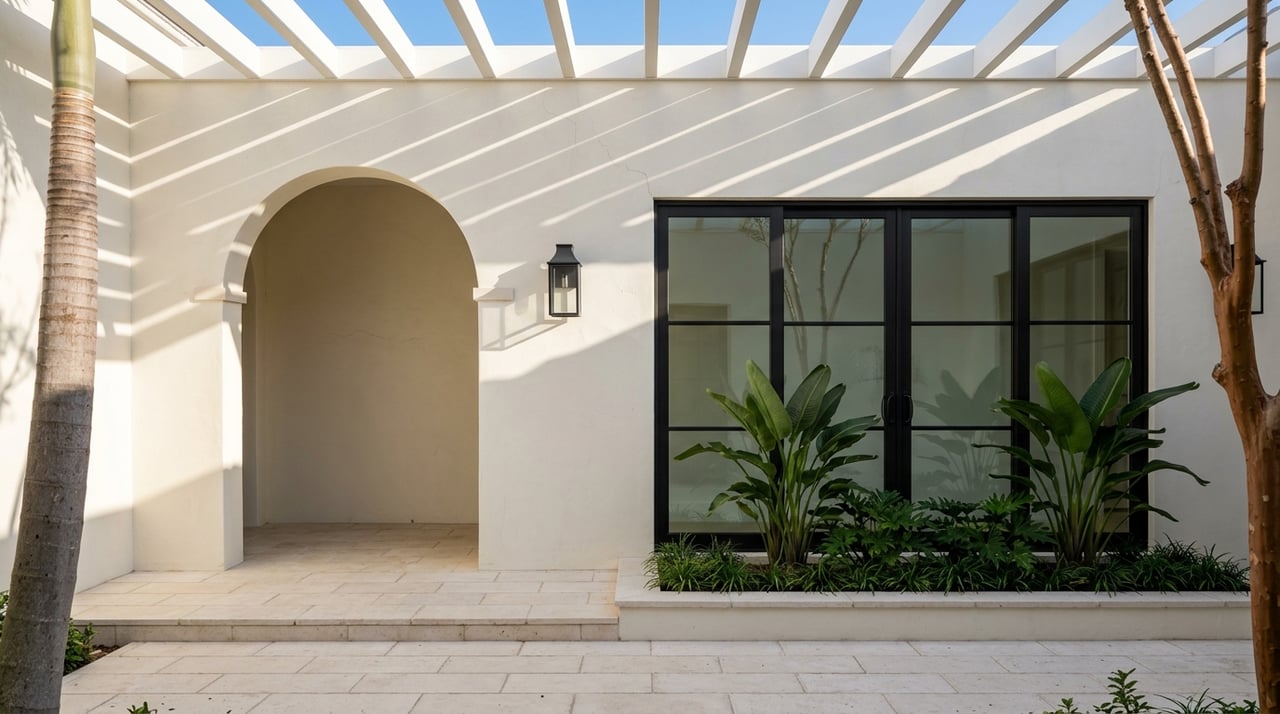
If you are planning a luxury home in Miami, style is about more than curb appeal. The right architectural language can shape how your home handles sun, views, outdoor living, and the realities of heat, flooding, and coastal weather. Whether you are drawn to old-world arches or glass-forward modern lines, understanding Miami’s design context can help you make smarter decisions from the start. Let’s dive in.
Why style matters in Miami
In Miami, architecture is closely tied to climate. Miami-Dade County defines May 1 through October 31 as Heat Season, and the county reports that days above 90°F have risen from 84 per year in 1970 to 133 per year today, while also tracking flood zones, storm surge, and sea level rise through its public tools and viewers. Miami-Dade County’s heat and resilience resources show why shade, durable materials, and thoughtful site planning matter so much here.
That climate helps explain why many luxury homes in the region prioritize deep terraces, courtyards, large openings, and strong indoor-outdoor flow. In Miami, style is rarely just visual. It often reflects how you want to live on the site every day.
Miami’s design heritage
Miami has an unusually rich architectural mix. According to the City of Miami Beach architecture overview, the city includes the world’s largest collection of Art Deco buildings, along with Mediterranean Revival, MiMo, and contemporary design. The same overview notes that Miami Beach historic districts encompass more than 2,600 buildings.
That layered history gives today’s homeowners real choice. You can lean into a timeless Mediterranean expression, a warm Tuscan interpretation, or a sleek modern coastal approach that feels open and resort-like. Each style has roots in the region, but each creates a very different experience at home.
Mediterranean Revival in Miami
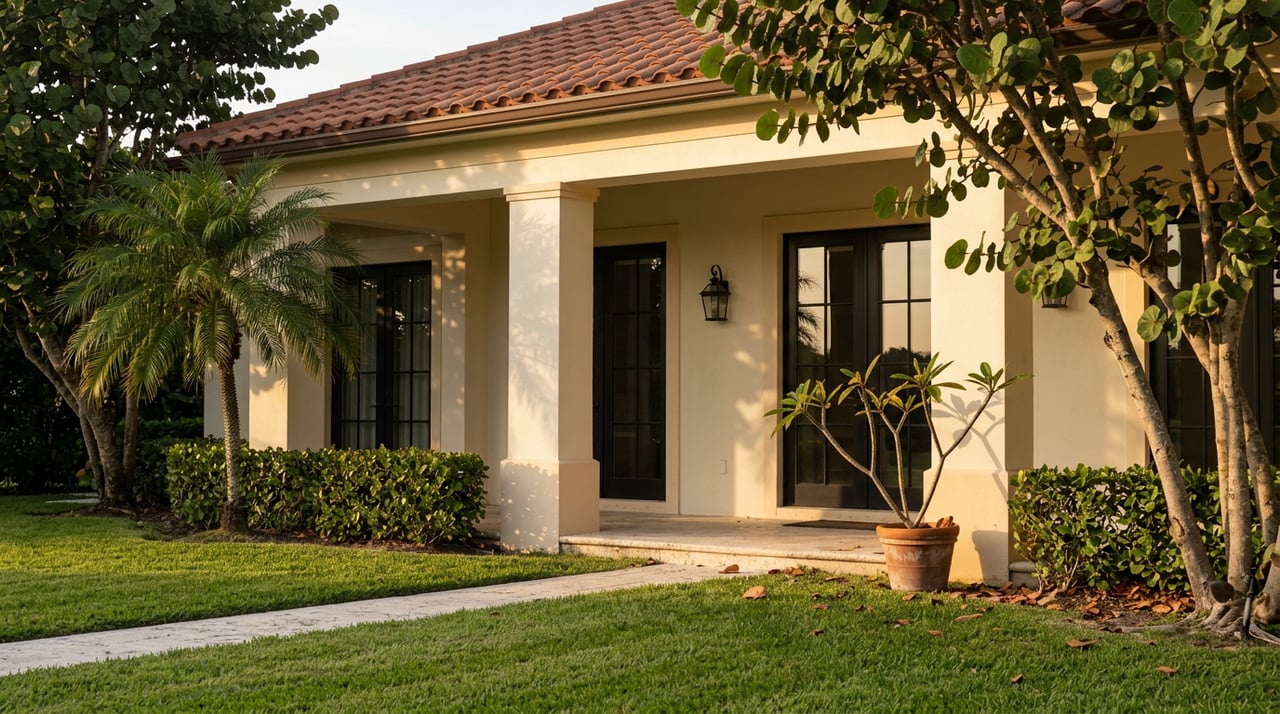
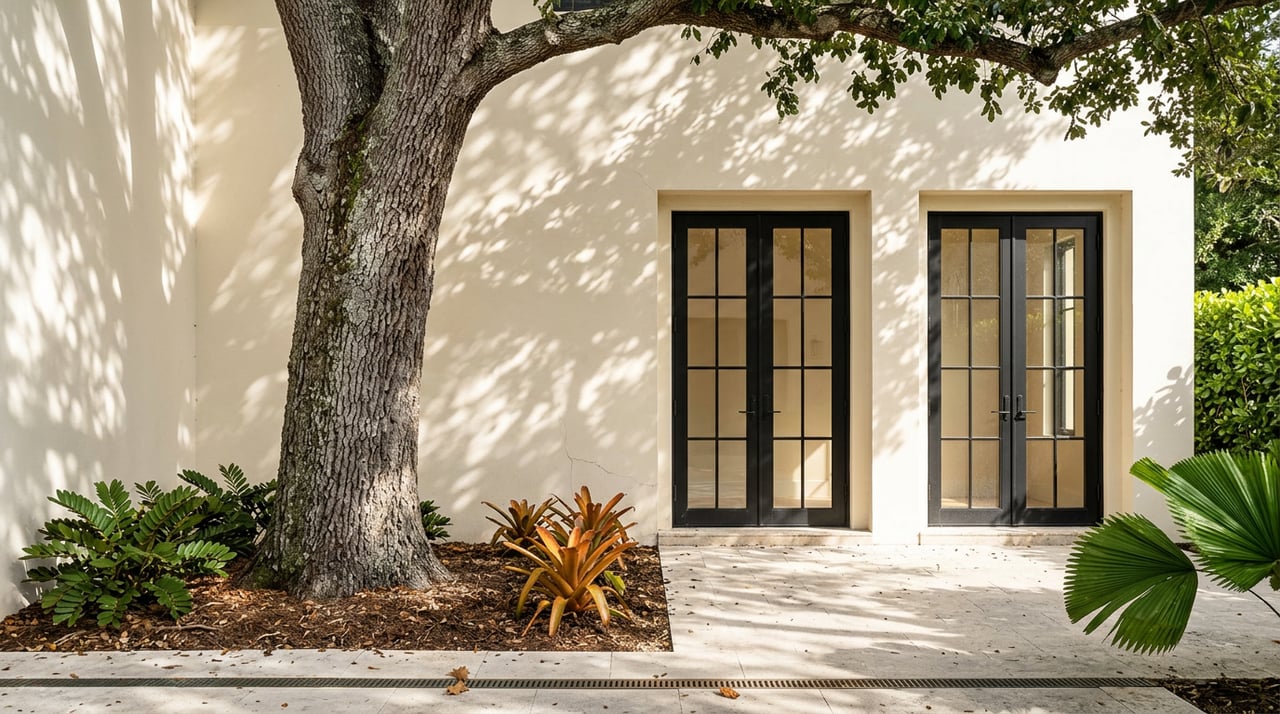
Mediterranean Revival is one of Miami’s most recognizable luxury styles. The City of Miami Beach’s Mediterranean Revival guide describes it as a style that became prominent in the 1920s and blends Mediterranean influences with South Florida’s tropical environment. Key features include light stucco walls, red clay tile roofs, arches, decorative tile, wrought iron, courtyards, and tropical landscaping.
For many owners, the appeal is its balance of elegance and comfort. Arched openings, shaded loggias, and landscaped courtyards can make a large home feel both refined and inviting. It is a natural fit if you want a house that feels grounded, established, and closely connected to the outdoors.
Where Mediterranean feels most local
Coral Gables is one of the clearest local reference points for this style. The city describes its Mediterranean architecture standards and heritage through features like native oolitic limestone, arcaded loggias, central courtyards, barrel tile roofs, and Spanish village-inspired entrances and plazas.
Landmarks such as the Biltmore Hotel help illustrate how this language feels in South Florida. It is not simply imported European design. In Miami, Mediterranean architecture often becomes more open, landscaped, and resort-oriented.
Tuscan style as a warmer variation
Tuscan style is often best understood as a more rustic branch of the Mediterranean family. According to SIA Architectural Design’s overview of Tuscan style, it is associated with warm color tones, natural stone, high vaulted ceilings with exposed beams, courtyards, garden spaces, travertine, terra cotta, wrought iron, and arched windows.
If Mediterranean Revival feels polished and formal, Tuscan often feels earthy and textured. You may prefer it if you want more stone, more visible craftsmanship, and a garden-centered atmosphere. In a Miami setting, that can translate especially well to shaded outdoor rooms, layered materials, and a home that feels substantial without feeling rigid.
Modern luxury styles in Miami
Modern luxury in Miami is not one single look. It draws from Art Deco, MiMo, and newer contemporary coastal design, each shaped by local light, tropical conditions, and a long tradition of architecture that celebrates leisure and views.
If you are exploring a more contemporary home, it helps to separate these influences. Some are historic and expressive. Others are minimal, transparent, and terrace-driven.
Art Deco’s lasting influence
Miami Beach notes that the first local Art Deco buildings appeared in 1933 with a tropical twist. The city describes Art Deco as vibrant and geometric, while its Art Deco page highlights Streamline Moderne features such as smooth curved lines, geometric simplicity, terrazzo floors, neon lighting, and glass block windows.
While most custom luxury homes today do not directly replicate classic Art Deco buildings, the style still influences Miami design. You can see it in bold geometry, sculptural detailing, and a sense of glamour that feels distinctly urban and coastal at the same time.
MiMo and mid-century resort character
MiMo, short for Miami Modern, grew out of the postwar years. The City of Miami Beach’s MiMo overview describes it as a late 1940s to 1960s style influenced by mid-century modernism, car culture, and the resort boom. Hallmark features include sleek and curved lines, flat roofs, large windows, expansive glass walls, breeze blocks, tropical motifs, and bold signage or neon marquees.
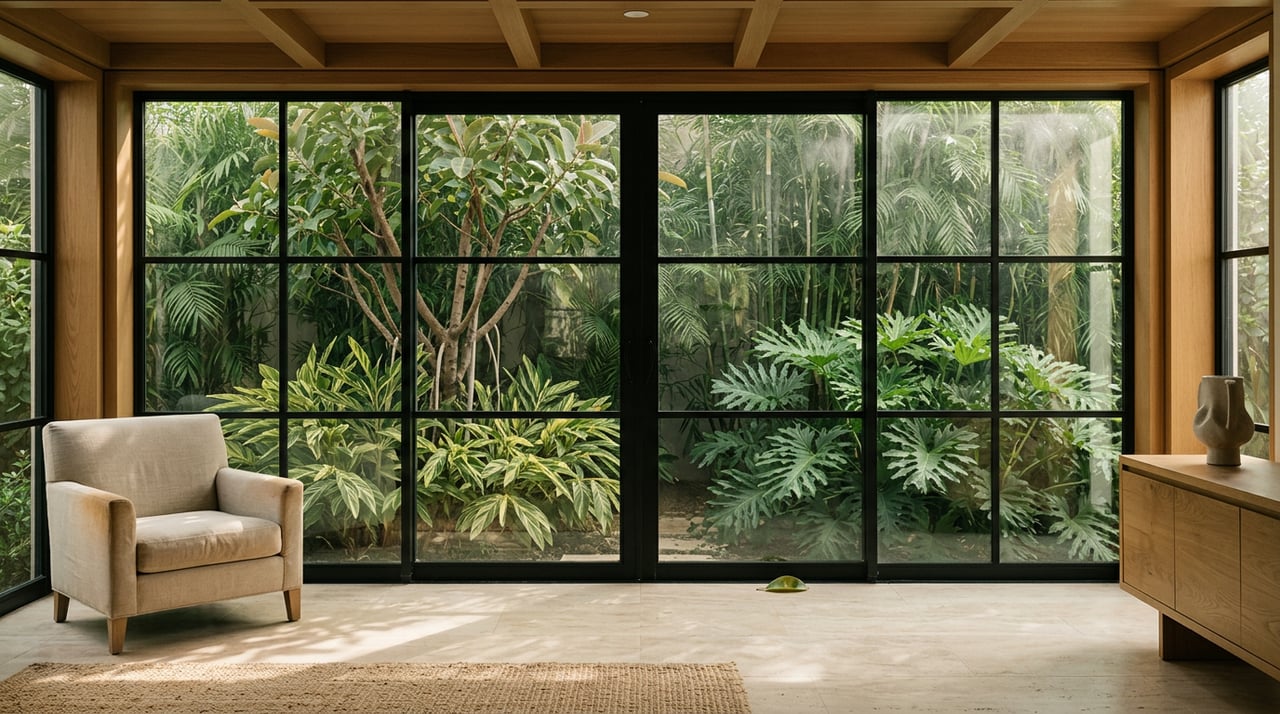
For a residential owner, the biggest takeaway is how strongly MiMo values light and openness. The city notes that expansive glass walls were used to capitalize on natural light and views. That mindset still shapes many luxury homes today, especially when the goal is to create an effortless connection between indoor living areas, terraces, pools, and waterfront settings.
Contemporary coastal luxury
Miami Beach also identifies Contemporary Design within its broader architectural landscape. Recent examples cited by the city point toward a style defined by floor-to-ceiling glass, spacious balconies, rooftop skydecks, outdoor kitchens, and amenity spaces that blur the line between indoors and outdoors.
This is the version of Miami modern many homeowners picture first. It is less about ornament and more about transparency, clean lines, and framing the site. If your priorities include water views, large entertaining spaces, and a streamlined material palette, contemporary tropical design may feel like the strongest fit.
Mediterranean vs modern
Choosing between Mediterranean and modern often comes down to how you want the home to feel, not just how you want it to look.
| Style | Typical feel | Signature features |
|---|---|---|
| Mediterranean Revival | Timeless and traditionally elegant | Stucco, tile roofs, arches, wrought iron, courtyards, tropical landscaping |
| Tuscan | Warm and rustic | Stone, beams, terra cotta, vaulted ceilings, garden spaces, arched windows |
| Art Deco | Glamorous and geometric | Strong forms, sculptural details, curved lines, terrazzo, glass block |
| MiMo | Playful and resort-oriented | Flat roofs, curves, breeze blocks, large windows, tropical motifs |
| Contemporary tropical | Open and view-driven | Glass walls, large terraces, rooftop decks, indoor-outdoor amenities |
A Mediterranean home often emphasizes mass, texture, shade, and sequence. A modern home usually emphasizes openness, light, glazing, and broad visual connection. Both can work beautifully in Miami when the design responds carefully to the lot and the climate.
How Miami climate shapes both styles
No matter which direction you prefer, climate should stay part of the conversation. Miami-Dade County tracks flood zones, storm surge, and sea level rise scenarios, which is an important reminder that local design decisions are practical as well as aesthetic.
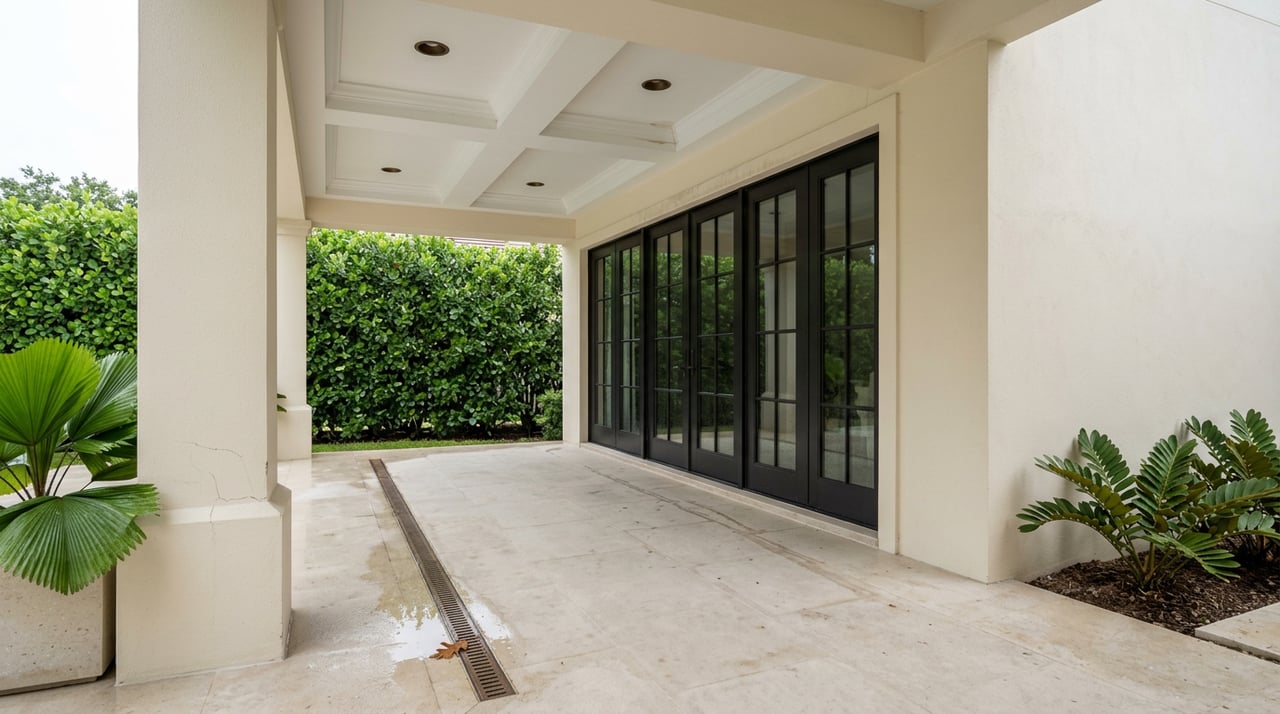
That is why outdoor rooms, covered terraces, durable materials, and site-responsive planning matter so much in luxury construction here. In many cases, the best Miami homes are the ones that turn climate challenges into part of the design language, whether that means a deep Mediterranean loggia or a modern covered terrace facing the water.
Neighborhood cues across Miami
Certain parts of the market naturally lean toward certain styles. The Miami Beach architecture overview makes Miami Beach one of the easiest places to see Art Deco, Mediterranean Revival, MiMo, and contemporary architecture side by side. Coral Gables remains a key anchor for formal Mediterranean expression.
Those associations can be helpful when you are evaluating a lot, a renovation, or a new custom build. A style may feel more authentic and convincing when it aligns with the site, streetscape, and broader architectural context around it.
Choosing the right style for your project
If you are weighing Mediterranean against modern luxury in Miami, focus on a few practical questions:
- How do you want the home to feel day to day? Formal and layered, or open and minimal?
- What matters most on your site? Garden privacy, water views, entertaining space, or all three?
- How important are texture and ornament? Mediterranean and Tuscan styles generally offer more visible detail.
- How much indoor-outdoor living do you want? Modern homes often push that connection further with glass walls and broad terraces.
- Will this be a ground-up custom build or a major renovation? The right path may depend on the structure, lot, and planning goals.
In high-end residential work, the strongest results usually come from matching architectural style to the site, the climate, and the way you actually want to live. That requires clear planning early, especially when the project involves estate-scale square footage, waterfront conditions, or complex custom detailing.
Whether you are drawn to the timeless presence of Mediterranean architecture or the clean openness of modern coastal design, your project benefits from a team that understands both design intent and South Florida construction realities. Jomed Construction brings a long-established, family-led approach to bespoke residential building in Greater Miami, with the planning discipline and craftsmanship needed for architecturally distinct homes.
FAQs
What defines Mediterranean luxury home style in Miami?
- Mediterranean luxury home style in Miami is typically defined by light stucco exteriors, red clay tile roofs, arches, wrought iron, decorative tile, courtyards, and tropical landscaping, based on the City of Miami Beach’s architectural guidance.
What makes modern luxury homes popular in Miami?
- Modern luxury homes are popular in Miami because they emphasize natural light, large windows, expansive glass walls, broad terraces, and strong indoor-outdoor living, which align well with the region’s climate and view-oriented sites.
What is the difference between Miami modern and MiMo style?
- In Miami, modern can describe a broad contemporary luxury look, while MiMo refers to a specific postwar architectural style with curved lines, flat roofs, expansive glass, breeze blocks, and resort-oriented character.
Where can you see Mediterranean and modern architecture in Miami?
- Miami Beach offers examples of Art Deco, Mediterranean Revival, MiMo, and contemporary design in close proximity, while Coral Gables is one of the strongest local references for Mediterranean architecture.
How does Miami climate affect luxury home design?
- Miami’s heat, flood considerations, storm surge risk, and sea level rise planning make shade, durable materials, site responsiveness, covered outdoor areas, and thoughtful elevation important parts of luxury home design.