If you are building or renovating a luxury home in Miami, beautiful materials are only part of the equation. In this climate, every finish has to perform under heat, humidity, heavy rain, UV exposure, and hurricane-driven demands that show up year after year. The good news is that you do not have to choose between elegance and durability. With the right material strategy, you can create a home that feels refined, ages well, and supports long-term value. Let’s dive in.
Why Miami changes material choices
Miami is not a market where materials can be selected on appearance alone. NOAA climate normals for Miami International Airport show an annual mean temperature of 77.5°F, summer average highs around 90 to 91°F, and annual rainfall of 67.41 inches, with wetter months concentrated from late spring into fall.
That means your home’s exterior and many transitional spaces are under steady pressure from sun, moisture, and heat. In practical terms, finishes that may work well in milder regions can break down faster here if the assembly behind them is not designed for local conditions.
There is also the code side of the equation. Miami-Dade County sits in the High-Velocity Hurricane Zone, and the City of Miami uses the Florida Building Code, 8th Edition, effective December 31, 2023. For luxury construction, that makes material selection as much a permitting and performance decision as a design one.
Start with approved exterior systems
In Miami-Dade, many exterior products are reviewed through Product Control. That includes windows, exterior glazing, wall cladding, roofing, exterior doors, skylights, glass block, siding, and shutters.
For windows and glass doors, permit guidance requires current Notices of Acceptance or Florida Building Commission approvals, along with product approval numbers, sizes, and positive and negative design pressures. In other words, a sleek profile or minimal frame is only part of the story. The product also has to fit the home’s engineering and approval path.
This is one reason experienced pre-construction planning matters on high-end homes. When design, approvals, and construction management are coordinated early, you can avoid late-stage changes that affect both aesthetics and schedule.
Best cladding materials for Miami luxury homes
Masonry and concrete-based systems
For many Miami luxury homes, dense mineral-based materials are a strong fit. FEMA identifies examples of flood-resistant materials such as brick, stone, porcelain, cement board, reinforced concrete, and concrete block, and notes that flood-resistant materials can remain in contact with water for 72 hours without significant damage.
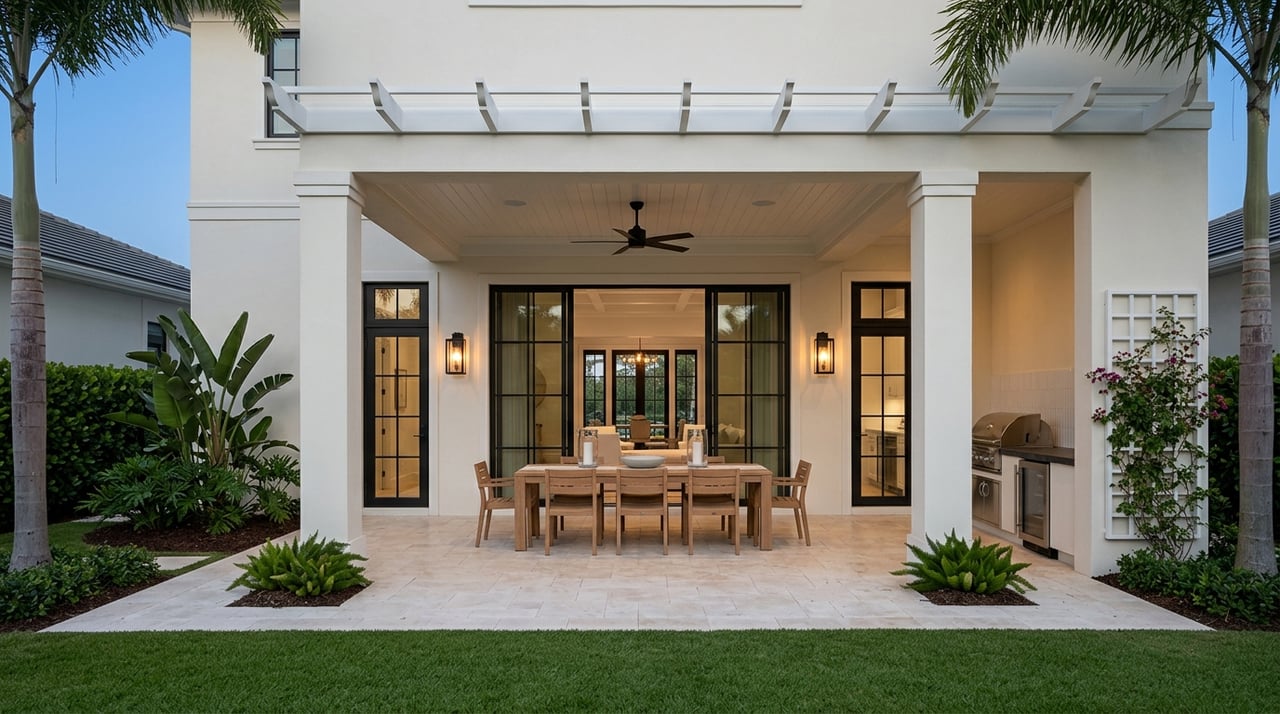
That makes these categories especially compelling for exposed façades, lower levels, outdoor living zones, and homes with a clean, modern coastal look. They also support a design-forward palette that feels substantial and polished without relying on frequent repainting or refinishing.
Porcelain and stone finishes
Porcelain and stone continue to stand out in Miami because they combine a refined visual finish with strong moisture tolerance. They work well on exterior walls, terraces, feature walls, and some outdoor kitchen or cabana applications where you want a crisp, architectural look.
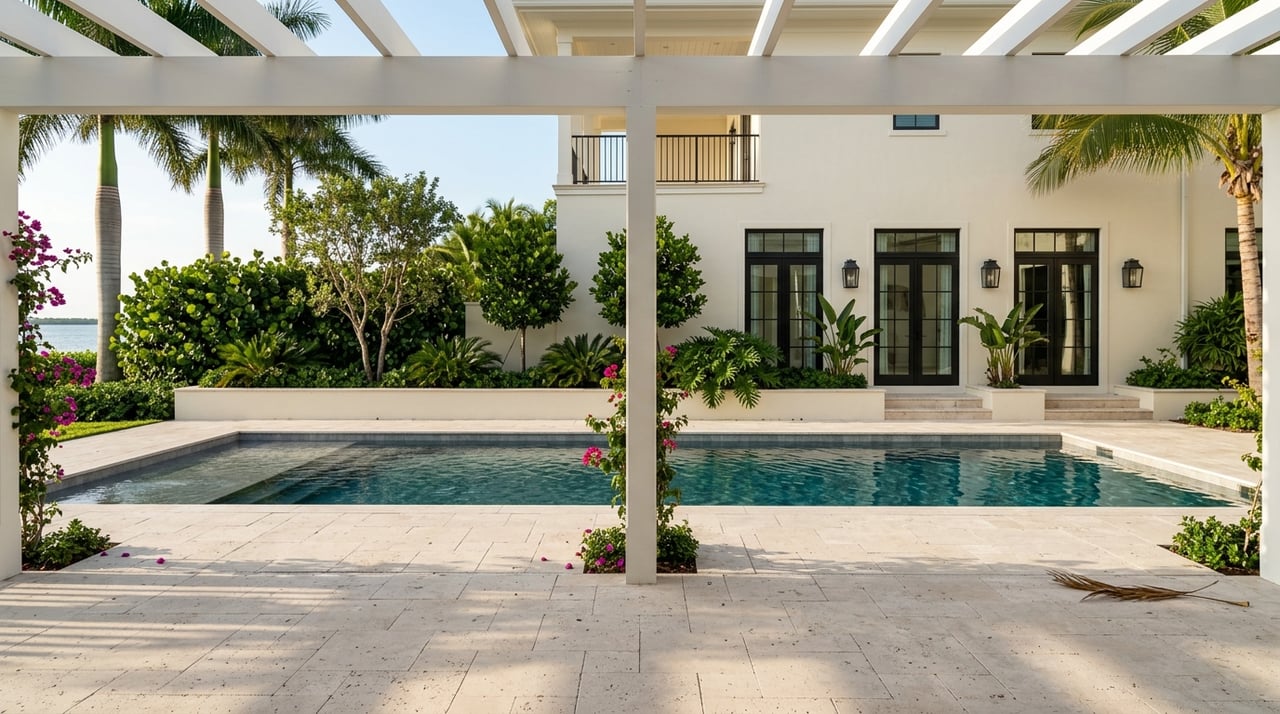
For estate-scale homes, these materials can also help create continuity between indoor and outdoor spaces. That is especially useful when the design calls for large openings, covered patios, and seamless transitions to the landscape or water.
Cement board and similar assemblies
Cement-board-based systems can offer a clean profile and a durable finish when detailed correctly. In Miami, the key is not just the visible surface but the full wall assembly behind it, including moisture management and approved installation.
This is where design-forward and durable should be treated as one conversation. A refined exterior elevation only performs over time if the hidden layers are doing their job.
Using wood carefully in Miami
Wood still has a place in luxury design. It adds warmth, texture, and craftsmanship that many owners want in soffits, ceilings, entry details, millwork, and select exterior accents.
But Miami asks more of wood than many other markets do. FEMA notes that moisture-related decay is prevalent in coastal areas and recommends preservative-treated or naturally durable wood, joints detailed to eliminate standing water, avoidance of cavity wall systems, and properly installed water-resistive barriers.
The takeaway is simple: wood can be beautiful here, but it usually demands tighter detailing and a clearer maintenance plan than mineral-based alternatives. If you want that warmth, it is wise to use it intentionally and place it where the assembly can support long-term performance.
Corrosion matters beyond the beach
Many owners assume corrosion is only a direct waterfront concern. In reality, FEMA guidance says accelerated corrosion can extend roughly 5 to 10 miles inland and is influenced by shoreline proximity, humidity, temperature, elevation, onshore winds, and exposure conditions.
That means corrosion-resistant thinking should extend beyond obvious oceanfront sites. Even if your visible cladding is stone, stucco, or porcelain, the hidden parts of the home still matter, including anchors, flashings, connectors, trim, rails, and fasteners.
In luxury construction, these decisions are easy to miss because they are often concealed. Yet they play a major role in how well a home ages and how much maintenance it demands over time.
Glazing and doors are performance systems
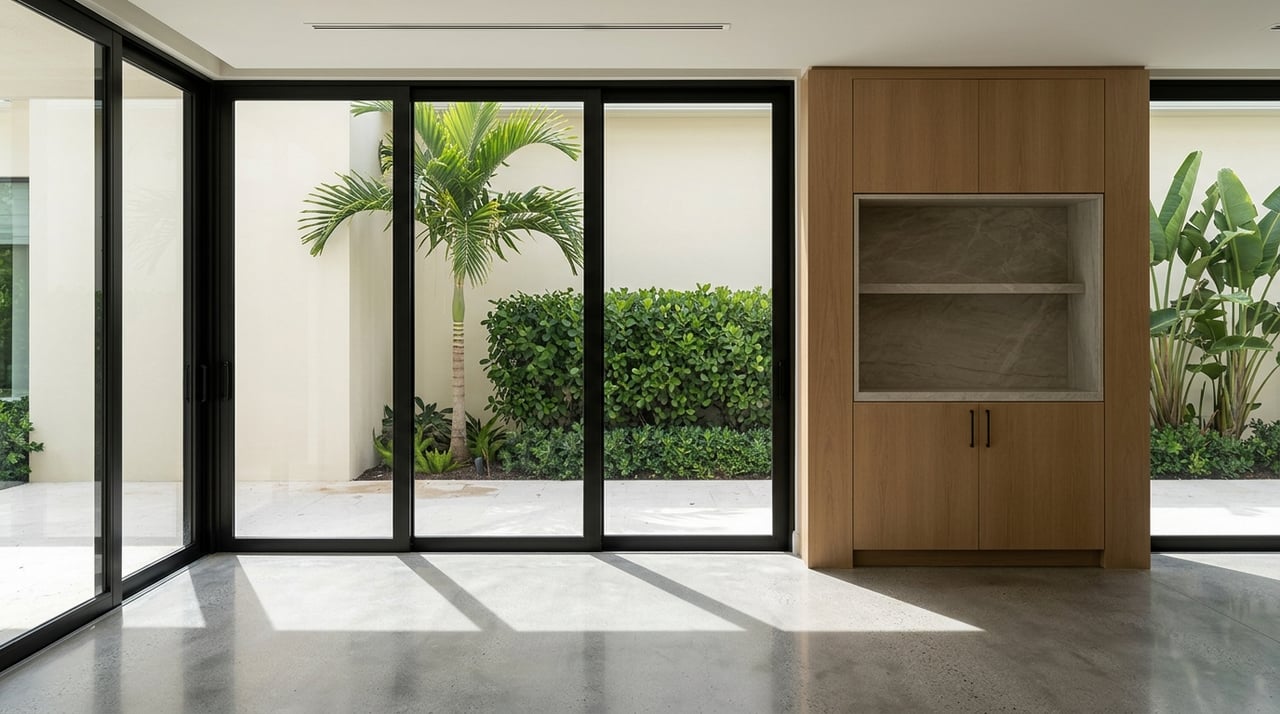
In a Miami luxury home, expansive glass is often central to the architecture. Tall French doors, large glazed panels, and broad window walls can define how the house captures light, views, and indoor-outdoor flow.
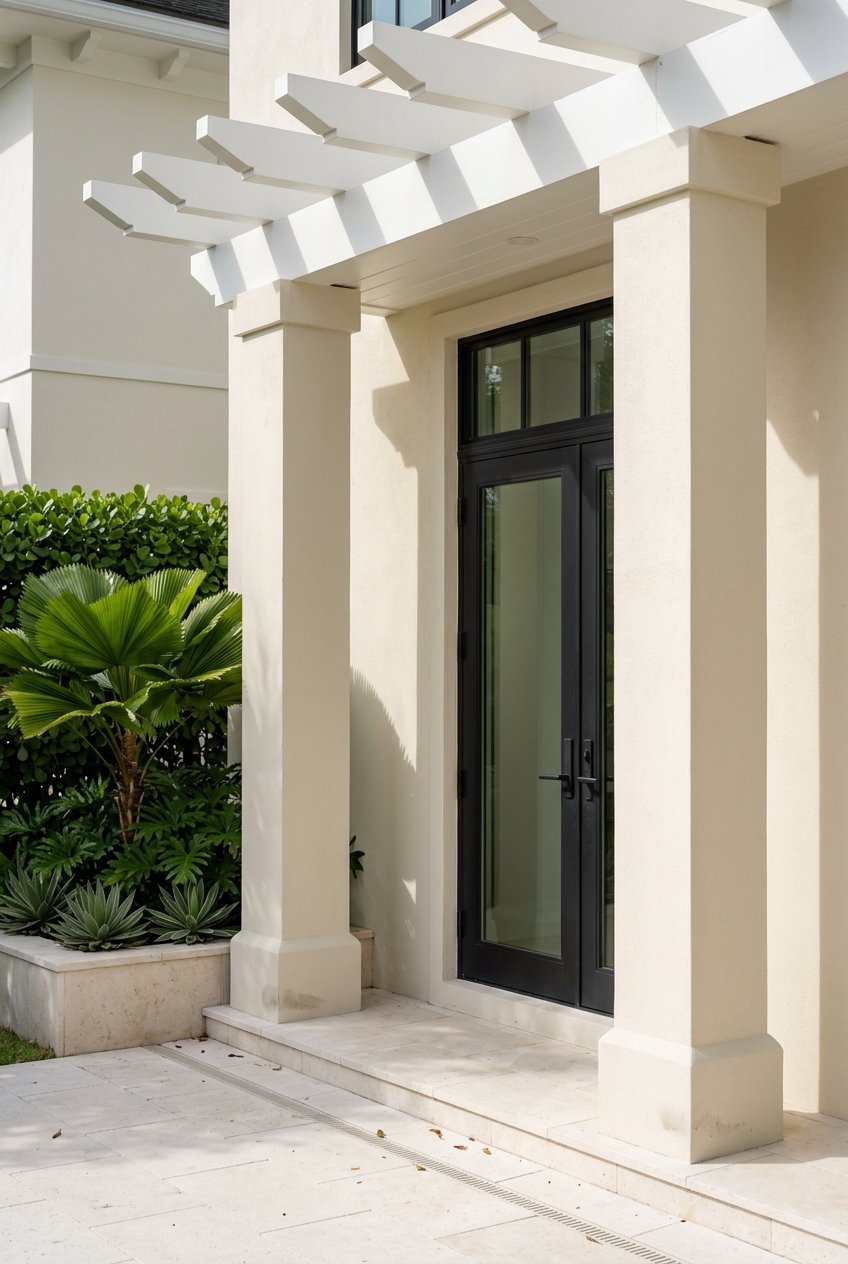
Still, these are not decorative add-ons. Miami-Dade permit guidance treats windows, doors, mullions, and glazing as performance systems with specific approval and design-pressure requirements.
That is why the best outcome usually comes from balancing sightlines, proportions, and structural realities from the start. You want the elegant look, but you also want a system that fits the code path, the exposure conditions, and the long-term water-management strategy.
Roofing is really an assembly decision
Miami roofs should be judged by more than the finish material. County hurricane-mitigation guidance makes clear that roof sheathing attachment, secondary water barriers in certain reroofing cases, and approved underlayment systems are central to performance.
For example, the county notes that asphaltic shingles, wood shingles or shakes, and architectural metal roof panels are discontinuous roof assemblies that require a secondary water barrier in specified reroofing situations. Cement and clay tile roofs also rely on approved underlayment systems.
This is why luxury roof choices in Miami are really assembly choices. Tile, metal, and membrane systems can all support a high-end design, but the hidden layers often have the biggest impact on longevity, maintenance, and water control.
Do not overlook flashing and edge details
FEMA guidance on roof flashing points to a common source of trouble: damaged or poorly performing flashing around windows, doors, chimneys, and skylights can lead to water intrusion, leaks, mold growth, corrosion, and dry rot.
That matters because many of the most visible architectural moments in luxury homes happen at transitions. Deep overhangs, parapets, skylights, balconies, and large door openings all rely on disciplined detailing behind the finish line.
Soffits also deserve close attention. FEMA notes that aluminum soffit panels are vulnerable in salt-laden air and recommends a more robust soffit system within 3,000 feet of salt-spray-producing water.
Smart materials for lower-level spaces
Ground-level and near-grade spaces in Miami often need their own material strategy. Garages, cabanas, storage rooms, outdoor kitchens, and lower-level entries may face a different moisture or flood-risk profile than upper living areas.
FEMA’s examples of flood-resistant materials include concrete, concrete tile, precast concrete, ceramic or clay tile, terrazzo, vinyl and rubber sheet or tile, pressure-treated or decay-resistant lumber, brick, metal, porcelain, stone, cement board, cold-formed steel, reinforced concrete, concrete block, and closed-cell foam insulation. FEMA states that flood-resistant materials can remain in contact with water for 72 hours without significant damage.
If any portion of your site is in a coastal flood zone such as VE, Miami-Dade describes that as a high flooding risk zone with added storm-wave hazards. In that case, material planning for lower-level enclosures and finishes becomes even more important.
How to balance beauty and durability
The most successful Miami luxury homes do not chase a single miracle material. They combine the right visible finishes with the right substrates, approvals, fasteners, flashings, underlayments, and water-management details.
A practical decision framework often looks like this:
- Confirm whether the project is in the HVHZ and whether selected products already carry the right approvals
- Review whether any part of the property falls within a coastal flood zone that affects lower-level finish choices
- Compare not just the finish material, but the full assembly behind it
- Use wood where it adds real design value, while planning for moisture exposure and maintenance
- Treat corrosion resistance as a whole-home issue, not just a waterfront issue
For high-end custom homes, this is where disciplined planning creates better design freedom. When the technical work is handled early and correctly, the finished home can feel lighter, cleaner, and more effortless.
Why pre-construction matters in Miami
In South Florida, material decisions ripple into permitting, procurement, sequencing, and long-term upkeep. A product that looks ideal on a sample board may create delays if approvals, design pressures, or assembly requirements are not aligned early.
That is why many sophisticated owners and design teams treat pre-construction as the real foundation of a luxury project. It is the stage where aesthetics, climate performance, code requirements, and construction logistics can be resolved before they become expensive field issues.
For a custom estate or waterfront residence, that level of planning protects more than the schedule. It helps preserve the architecture itself, so the design vision is delivered with the durability Miami demands.
If you are planning a luxury home or major renovation in Miami, the best material choices are the ones that look exceptional and stand up to South Florida conditions for years to come. To discuss a design-sensitive, technically rigorous approach for your project, request a consultation with Jomed Construction.
FAQs
What materials are most durable for Miami luxury home exteriors?
- In Miami, many durable exterior categories include concrete, concrete block, brick, stone, porcelain, ceramic or clay tile, and cement-board-based systems, especially when they are part of a well-detailed, approved assembly.
Why do Miami windows and doors need special approvals?
- Miami-Dade requires current Notices of Acceptance or Florida Building Commission approvals, plus product approval numbers, sizes, and design pressures for many window and door systems used in permitting.
Is wood a good choice for a Miami luxury home?
- Wood can work well for warmth and character, but in coastal conditions it usually needs preservative-treated or naturally durable species, careful joint detailing, proper water-resistive barriers, and a realistic maintenance plan.
What roofing materials work best for Miami homes?
- Tile, metal, and other roofing finishes can all work in Miami, but long-term performance depends heavily on the full roof assembly, including sheathing attachment, underlayment, flashing, and any required secondary water barriers.
Do inland Miami homes still need corrosion-resistant materials?
- Yes. FEMA guidance notes that accelerated corrosion can extend about 5 to 10 miles inland, so corrosion-resistant connectors, flashings, anchors, trim, and fasteners are worth considering well beyond the shoreline.
How should Miami homes handle lower-level finish selections?
- Lower-level spaces such as garages, cabanas, storage areas, and outdoor kitchens often benefit from more moisture-tolerant and flood-resistant materials like concrete, porcelain, stone, tile, cement board, and closed-cell foam insulation where appropriate.