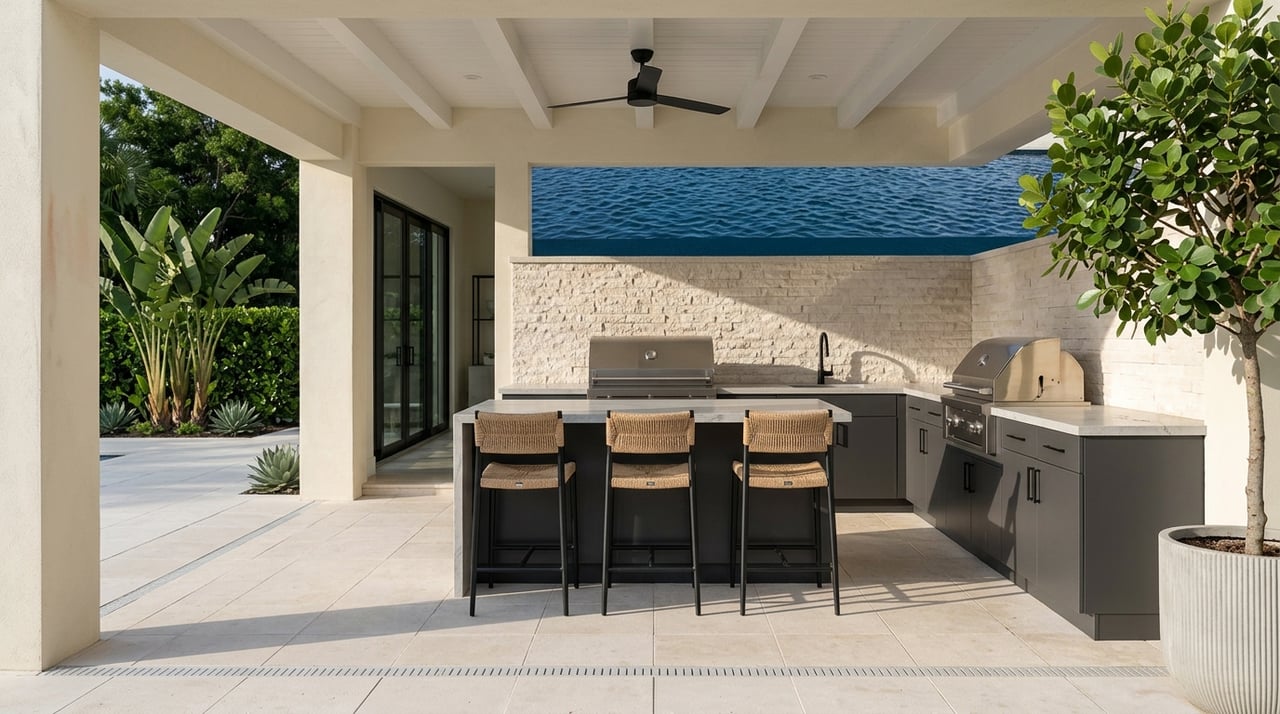
Do you really get the most out of a Miami estate if the outdoor spaces are only beautiful on a perfect day? In South Florida, outdoor living is part of daily life, but the climate asks more of every terrace, pool court, and rooftop than good styling alone can deliver. If you are planning a new build or a major renovation, understanding how shade, drainage, wind, and permitting shape the design will help you create spaces that feel effortless to use and built to last. Let’s dive in.
Outdoor living in Miami starts with climate
Miami supports year-round outdoor living, which is a major advantage for estate homes. Miami Beach climate normals from 1991 to 2020 show an average annual high of 81.2°F and an average annual low of 70.9°F, with July and August average highs near 88°F. That kind of warmth makes covered terraces, outdoor dining areas, and poolside lounges feel like true extensions of the home.
At the same time, Miami is not a mild, low-maintenance environment. Annual precipitation reaches 57.18 inches, with the wettest stretch running from late spring through early fall and monthly rainfall peaking in June, August, and September. In practical terms, that means the best outdoor rooms are designed to recover quickly after heat, humidity, and heavy rain.
Why estate-scale spaces need more planning
On a larger property, outdoor living is rarely just one patio and a grill. You may be coordinating a loggia, a summer kitchen, a pool court, an upper terrace, and in some cases a dock or waterfront edge. When those spaces work together, they support the way you entertain, relax, and move through the property.
In Miami, that coordination matters because site conditions are real design drivers. Miami-Dade notes that the county sits close to sea level and has groundwater just below the surface, so major rain events can leave water with nowhere to drain. For estate homes, outdoor spaces should be planned as long-life systems, not decorative add-ons.
Loggias and covered terraces that stay usable
Shade is the first comfort feature
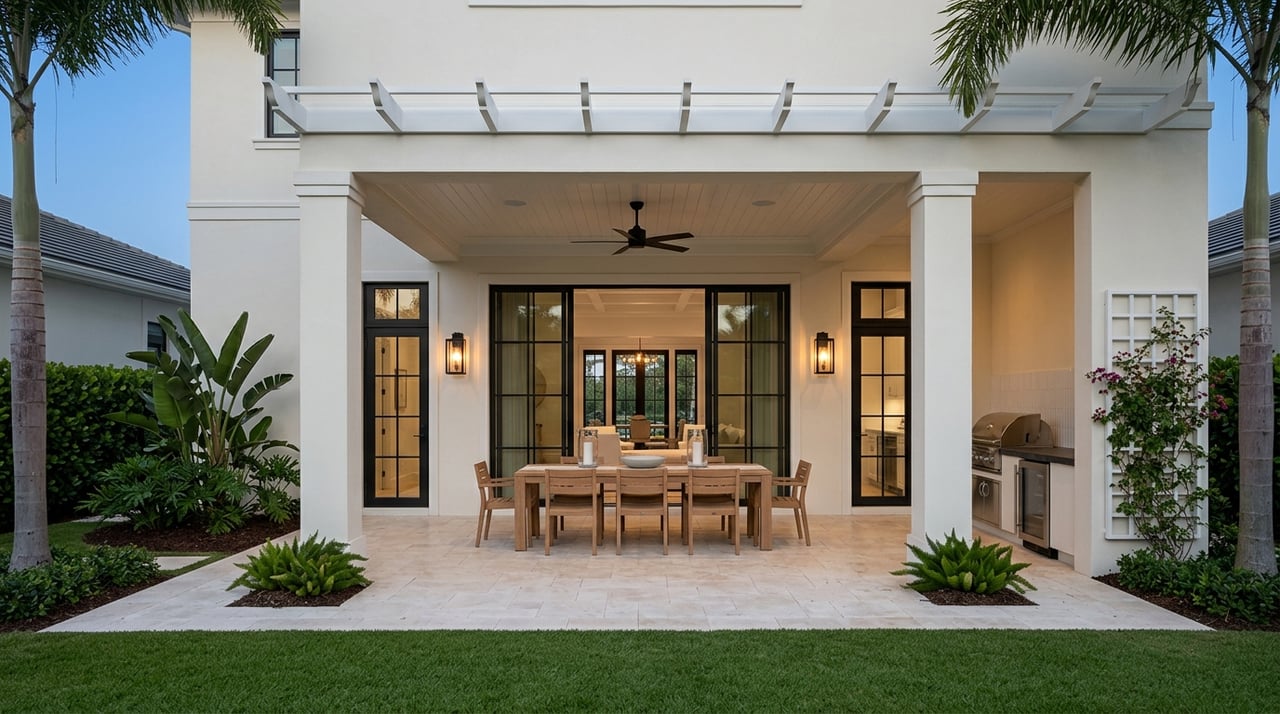
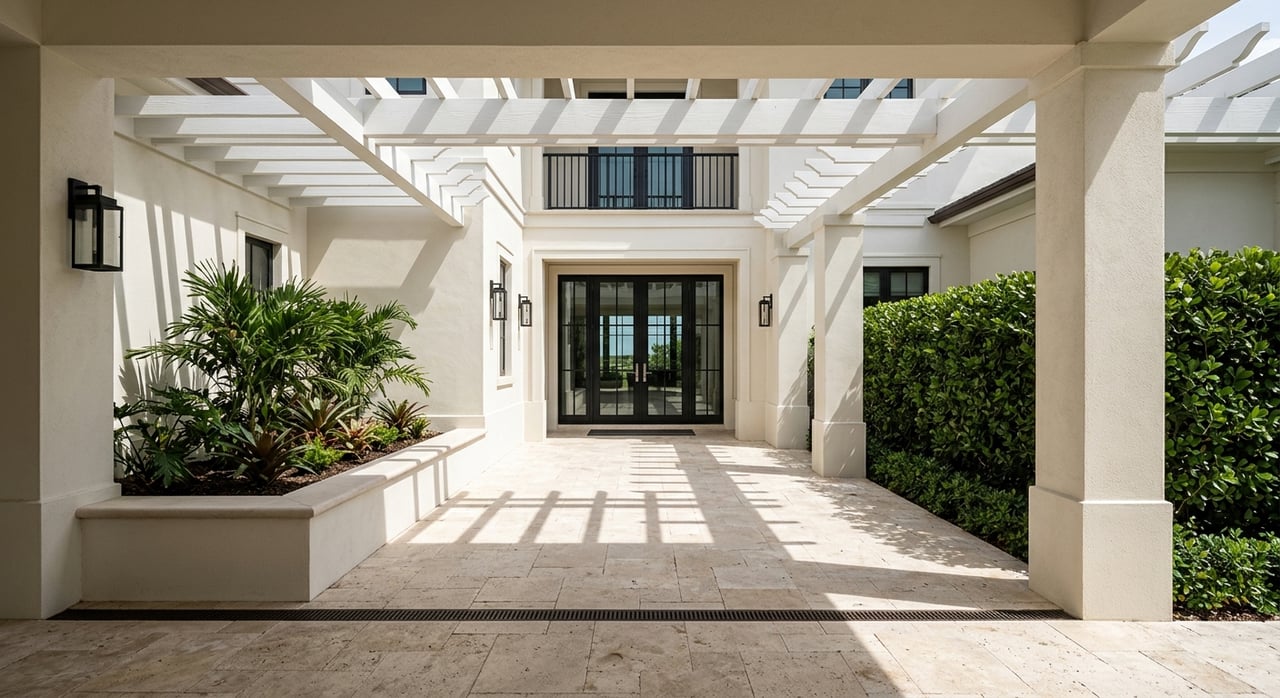
In Miami, shade does more than improve comfort. It helps reduce direct solar exposure and makes outdoor seating, dining, and circulation more usable through more hours of the day. Deep overhangs, recessed seating areas, and covered walkways are often what turn a terrace into a space you actually enjoy regularly.
For estate homes, that usually means treating the covered terrace as a primary living room, not an afterthought. The proportions need to support lounging, dining, and movement while still keeping key areas protected from sun and sudden rain. A generous covered zone also helps furnishings and finishes age more gracefully over time.
Airflow matters as much as coverage
A covered terrace can still feel uncomfortable if air does not move well. In Miami’s warm and humid conditions, a successful loggia combines shade with airflow, ceiling fans, and finishes that can handle splash, moisture, and routine cleanup. Comfort comes from that combination, not from roofing alone.
This is where early planning pays off. Ceiling details, fan placement, and the relationship between openings and breezes should be considered as part of the architecture, not layered in at the end. The result is a space that feels calm, functional, and aligned with the home’s design.
Summer kitchens that work like real utility spaces
Outdoor kitchens need more than good looks
A summer kitchen in a Miami estate should be treated as a working service zone, not just a decorative grilling station. If the space includes electrical, gas, plumbing, or mechanical components, Miami-Dade requires permits for that work. The county also states that permits are needed for pergolas, gazebos, pools, spas, fences, windows, and doors.
That matters because the layout of an outdoor kitchen affects much more than appliance selection. Utilities, venting, drainage, and service access all need to be resolved early so the finished space performs well and moves smoothly through approvals.
Materials should suit a coastal environment
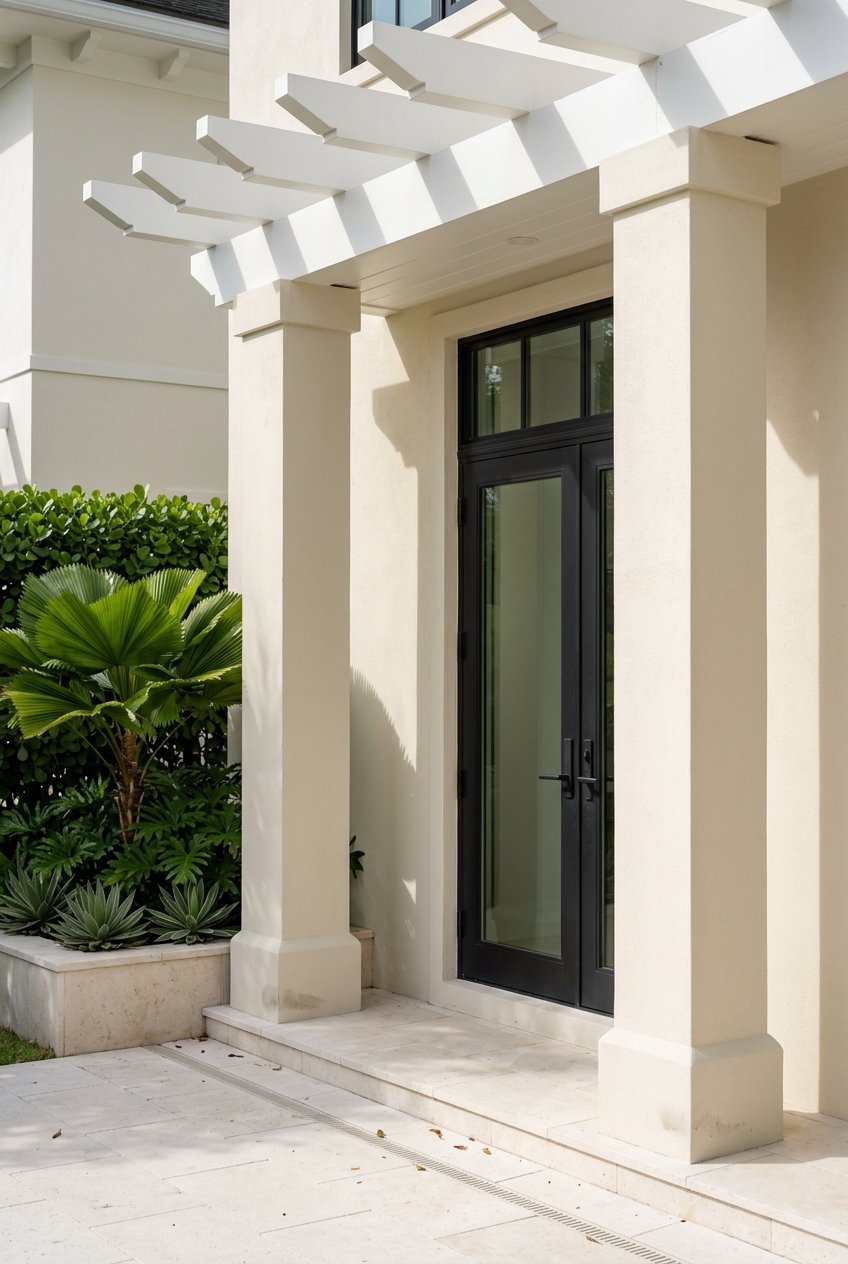
Miami’s coastal conditions are hard on exposed assemblies. FEMA coastal guidance emphasizes resistance to corrosion and decay, which supports the use of corrosion-resistant hardware and assemblies that can be serviced without taking apart the entire terrace. On a high-end estate, durability often comes from hidden detailing just as much as visible finishes.
That means you should think beyond the countertop and cabinet style. Fasteners, connectors, and mixed-material transitions all affect how an outdoor kitchen holds up over time. The most successful spaces are the ones that remain elegant after years of heat, salt air, moisture, and routine maintenance.
Pool courts designed as a whole composition
Pool planning should happen early
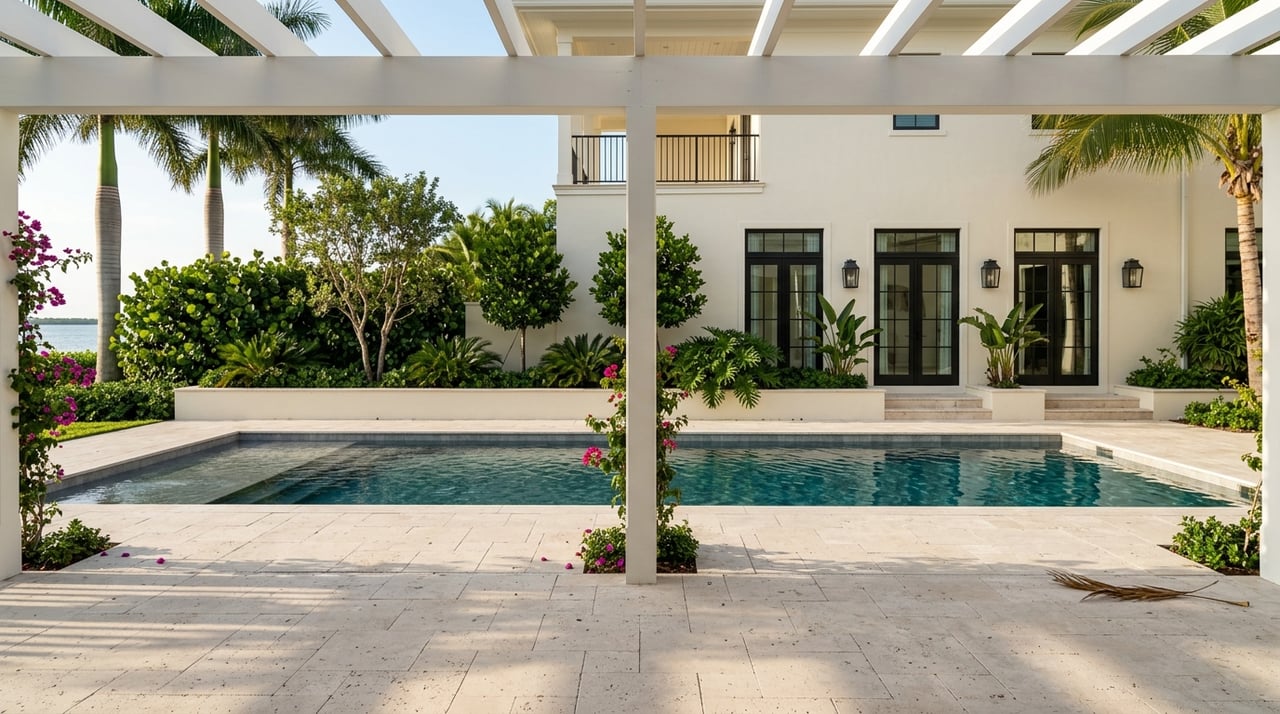
On an estate property, the pool is usually one piece of a larger outdoor composition. Deck drainage, equipment screening, lounge zones, covered seating, and paths to the house all need to be coordinated before the pool shell is finalized. If these decisions are delayed, the overall space can feel fragmented.
In Miami-Dade, timing also matters because the permit and inspection sequence affects how the project moves forward. Thinking through the full pool court early helps support smoother execution and a more resolved finished environment.
Safety barriers are part of the process
Miami-Dade states that a pool cannot be used or filled with water until a separate permit has been pulled and a final inspection has been obtained for an approved safety barrier. The county form also specifies a spring-lock, self-closing gate that stays locked when the pool is not in use. These are not details to sort out at the end.
For homeowners, the takeaway is simple. Pool design should include the barrier strategy from the beginning, so the final result feels integrated with the architecture and landscape rather than added on as a visual compromise.
Rooftop decks and upper terraces in Miami
Wind loads change the design approach
Rooftop decks can be spectacular in Miami, especially when they capture water views, skyline views, or breezes above the landscape line. But they require a structural and waterproofing mindset from the start. Miami-Dade is in the High-Velocity Hurricane Zone, and Florida code provisions for that zone require buildings and parts to be designed for dead, live, wind, and other loads, with a cited Miami-Dade design wind speed of 175 mph.
That means rooftop planning is about much more than choosing railings and surface materials. Structure, attachment methods, waterproofing layers, and the way outdoor elements interact with the building envelope all deserve close attention.
Waterfront features may need engineering
If the outdoor program extends beyond the house to include a dock, seawall, retaining wall, or similar waterfront construction, the planning requirements can increase. Florida code language for the High-Velocity Hurricane Zone states that this type of waterfront construction must be planned and designed by a licensed engineer, except in limited private-residential situations.
For an estate owner, this reinforces an important point. On complex waterfront sites, outdoor living works best when architecture, engineering, and construction management are aligned early and carried through with discipline.
Durability details that protect long-term value
Corrosion resistance is essential
Miami outdoor spaces are exposed to moisture, heat, and often coastal air. FEMA guidance notes that 304 or 316 stainless-steel connectors and fasteners provide superior corrosion resistance in coastal areas, and that fasteners used with pressure-treated wood should be compatible with the preservative treatment. Those technical choices matter because small failures at hidden connections can lead to larger maintenance issues later.
In a luxury setting, lasting quality often depends on what you do not see at first glance. Corrosion-resistant metals, compatible materials, and detailing that avoids trapped water help outdoor rooms maintain both performance and appearance.
Drainage and drying should be built in
Because Miami-Dade sits close to sea level and has a high groundwater table, occasional flooding after major rain events is a practical concern. Outdoor rooms should be detailed so water sheds quickly, drains properly, and does not collect in concealed areas. This is just as important as the furniture layout or surface palette.
A well-built outdoor space should look refined on opening day and continue to function through repeated wet seasons. That is one of the clearest differences between a space designed for photographs and one designed for real life in Miami.
Permitting and flood-readiness before design is locked
Jurisdiction affects the approval path
Not every Miami-area project follows the exact same review process. Miami-Dade states that incorporated municipalities have their own building officials, while unincorporated areas are handled by the county. So a project in Miami, Miami Beach, or Kendall may have a different approval path depending on the exact location.
That makes local planning especially important at the pre-construction stage. Knowing the jurisdiction early helps set realistic timelines and keeps major outdoor elements aligned with the correct permitting process.
Flood maps and surge zones should guide decisions
Before finalizing a terrace, rooftop deck, or pool court, the site should be checked against Miami-Dade flood-zone maps and storm-surge planning zones. The county identifies coastal VE zones as high-flooding-risk areas with mandatory flood-insurance requirements, and it also notes that storm-surge zones are separate from flood zones. Miami-Dade also emphasizes that storm surge is the primary reason residents evacuate before hurricanes.
For waterfront and low-lying properties, this information should shape the concept from the beginning. Elevation changes, storage, material selection, and drainage strategy are all stronger when they respond to the site instead of fighting it.
What a successful Miami outdoor program includes
At the estate level, outdoor living should feel generous and relaxed, but the planning behind it needs to be rigorous. The strongest projects usually combine architectural clarity with climate-responsive detailing and a realistic understanding of local approvals. That is how outdoor spaces stay beautiful, usable, and easier to maintain over the long term.
A thoughtful Miami outdoor program often includes:
- Deep shade for seating and circulation
- Strong airflow with well-placed fans and open connections
- Drainage planning that responds to heavy rain and site conditions
- Corrosion-resistant hardware and compatible materials
- Early coordination for kitchens, pools, rooftops, and utilities
- Permit-aware planning based on the exact municipality or county path
- Flood-zone and storm-surge review before design decisions are finalized
When these pieces are handled well, outdoor living becomes more than an amenity. It becomes part of the architecture and part of how the property performs.
For estate homeowners in Greater Miami, that level of planning is where lasting value is created. If you are considering a custom home, a major renovation, or a complex outdoor expansion, Jomed Construction brings the local construction knowledge, design sensitivity, and disciplined pre-construction approach needed to execute these spaces with confidence.
FAQs
What makes outdoor living spaces in Miami different from other markets?
- Miami’s year-round warmth supports daily outdoor use, but the climate also brings high humidity, heavy seasonal rain, flood considerations, and hurricane-related wind demands that require more careful planning.
What permits may be needed for a Miami outdoor living project?
- Miami-Dade says permits may be required for outdoor work tied to occupancy and for electrical, gas, mechanical, plumbing, pergolas, gazebos, pools, spas, fences, windows, and doors, though the exact path depends on the property’s jurisdiction.
What should a Miami estate pool project include from the start?
- A coordinated plan for deck drainage, circulation, shade, equipment screening, and the required safety barrier should be included early so the pool court works as one complete composition.
Why does drainage matter so much for Miami outdoor spaces?
- Miami-Dade notes that the county is close to sea level with groundwater just below the surface, so during major rain events water may have limited places to drain, making drainage strategy essential.
What materials help outdoor spaces last near the coast in Miami?
- FEMA coastal guidance supports corrosion-resistant materials and notes that 304 or 316 stainless-steel connectors and fasteners offer superior corrosion resistance in coastal areas.
What should homeowners check before finalizing a Miami waterfront outdoor design?
- You should review the site’s flood-zone map, storm-surge planning zone, and any waterfront construction requirements early, since these factors can affect design, engineering, insurance requirements, and approvals.