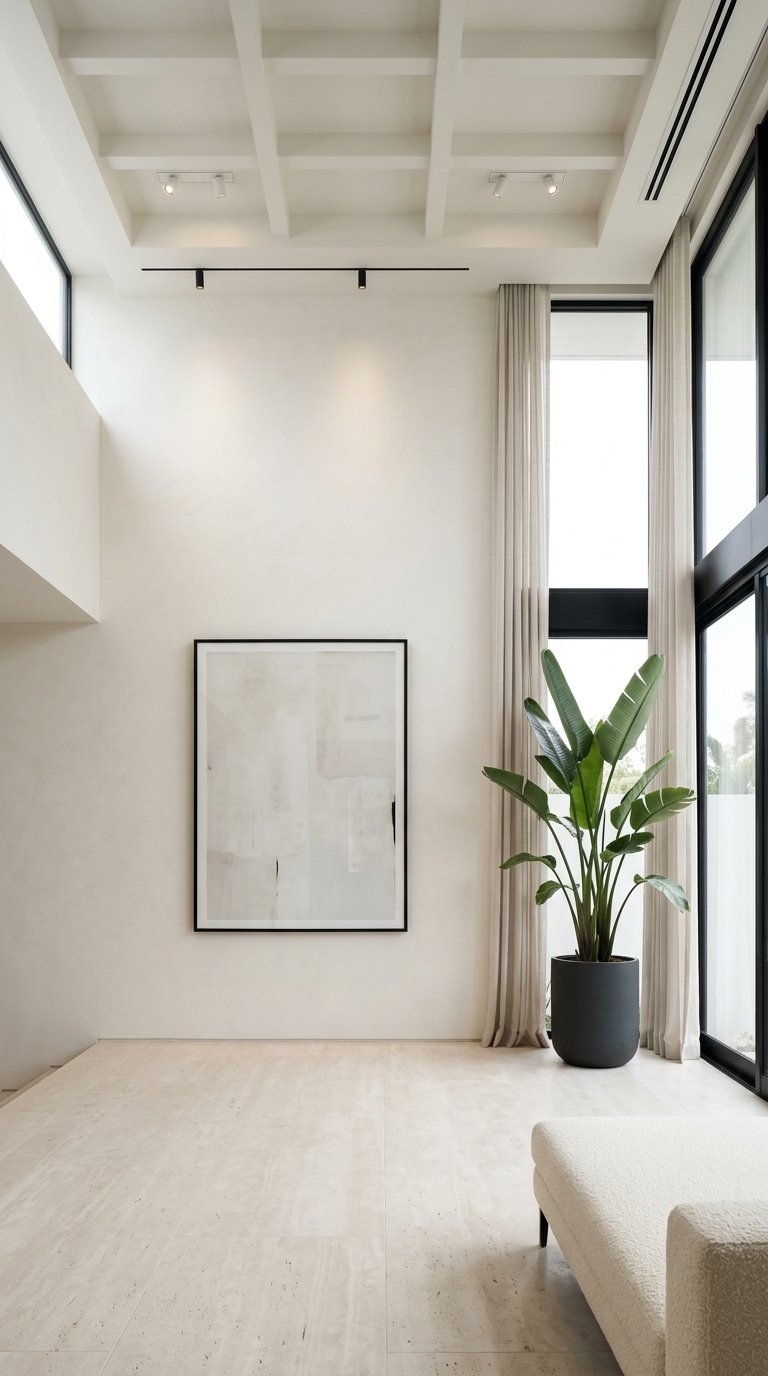
What does it take to build a Miami home that can truly live with a serious art collection? If you collect paintings, works on paper, sculpture, textiles, or design objects, you are not just planning a beautiful house. You are planning a home where architecture, light, climate control, and security all need to work together from day one. In Miami, that matters even more because the city’s art culture is strong, the climate is demanding, and flood and storm conditions shape smart building decisions. Let’s dive in.
Miami gives collector homes real context
Miami is not a market where art feels separate from daily life. Miami-Dade County’s 2024 State of the Arts address describes a large cultural ecosystem with more than 1,000 cultural groups and thousands of artists, along with major institutions such as the Rubell Museum, El Espacio 23, and the De La Cruz Collection.
That larger backdrop changes how a collector home can function. In Miami, art often lives alongside architecture, design, and entertaining rather than behind the walls of a formal gallery. For you, that creates an opportunity to build a residence where the collection feels integrated, personal, and still carefully protected.
The regional calendar supports that idea too. Art Basel Miami Beach takes place each December, and Miami Beach treats Art Week as a citywide cultural event with exhibitions and public art installations. The Miami Design District also reflects how closely art, retail, and architecture are connected in the local market.
Why Miami building decisions matter more
A serious art home in Miami cannot be planned around aesthetics alone. Miami Beach’s 1991 to 2020 climate normals show a year-round hot climate, with an annual mean temperature of 76.1 degrees Fahrenheit and an August mean of 83.1 degrees.
At the same time, Miami-Dade County identifies flooding as a persistent coastal and inland threat. The county’s low elevation and shallow underground water conditions make water management a long-term planning issue, not just a storm-season concern.
For a collector residence, that means the building envelope and site strategy deserve as much attention as interior finishes. Collection rooms, archival storage, and mechanical systems should be placed with flood exposure in mind. In practical terms, above-grade placement, strong drainage planning, and resilient exterior assemblies are not luxury upgrades. They are core parts of protecting the home and what it holds.
Start with the envelope
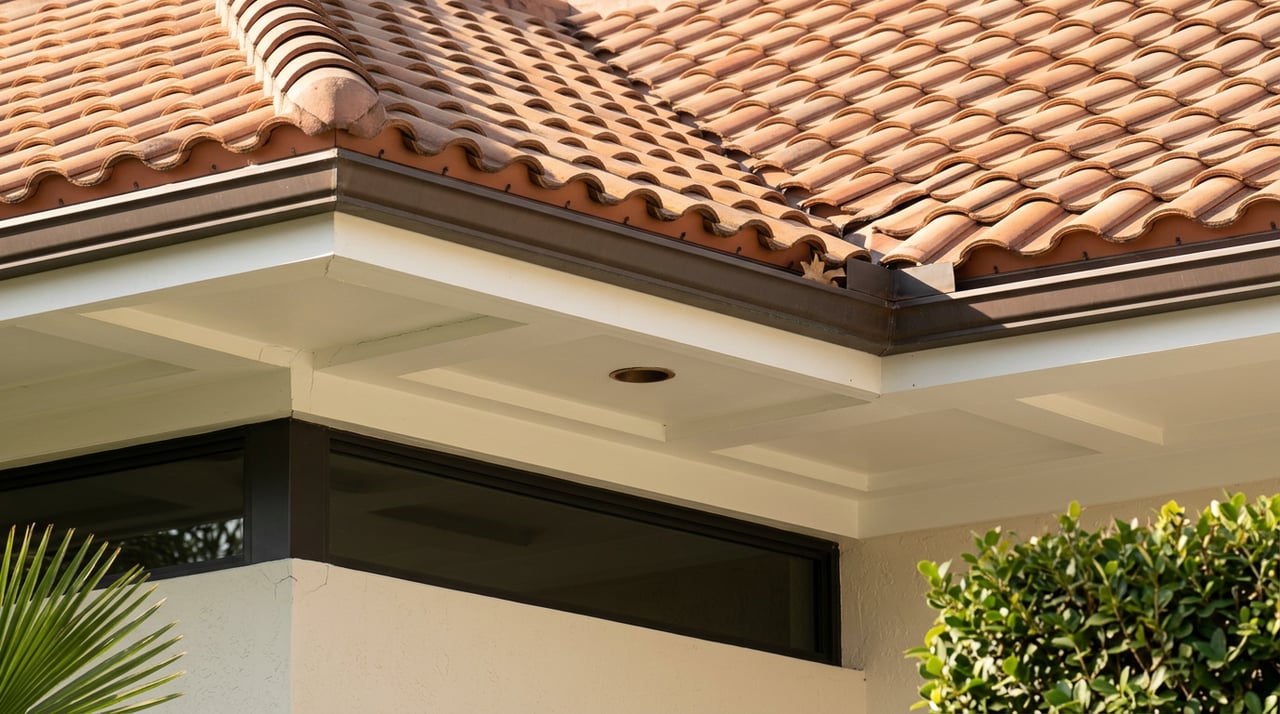
In South Florida, the exterior shell of the house does heavy lifting. Florida’s building framework identifies Miami-Dade as part of the High-Velocity Hurricane Zone, and Miami-Dade’s product approval process covers critical components such as windows, exterior glazing, doors, roofing, shutters, cladding, skylights, and siding.
That matters for any luxury home, but it matters even more for one that holds valuable art. When wind, water intrusion, heat, and intense sun are all part of the local environment, you want the envelope to be treated as a performance system, not a collection of isolated finish choices.
For you, this often means asking the right questions early:
- Where will the most sensitive works live?
- Which rooms need the strongest environmental consistency?
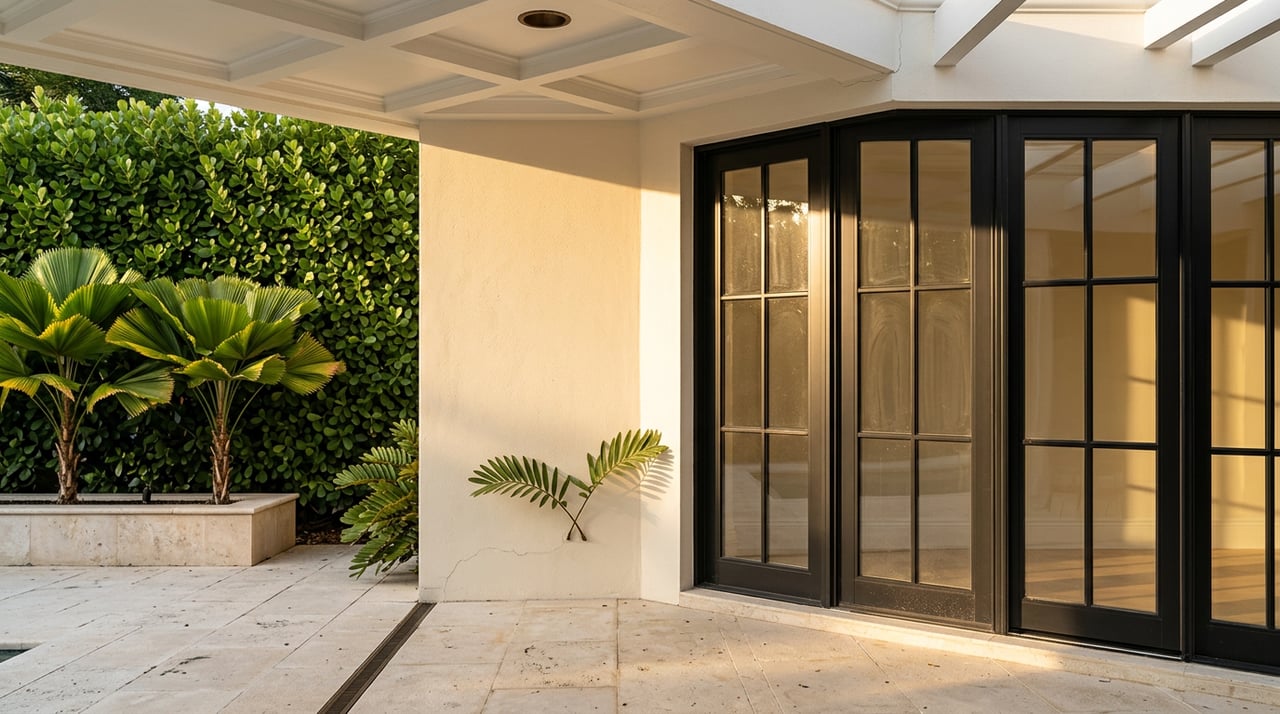
- How much glass is appropriate for each space?
- Which glazing, shading, and roofing decisions support long-term protection?
- Where should storage and back-of-house functions be placed?
When those decisions happen during pre-construction, the house can support both preservation and daily living without compromise.
Stable climate protects the collection
For art, stability is often just as important as the target setting. Smithsonian conservation guidance notes that fluctuating temperature and relative humidity can cause irreversible damage. Its textile-storage guidance references a commonly used museum target of about 70 degrees Fahrenheit plus or minus 4 degrees and 45 percent relative humidity plus or minus 8 percent for one class of collection.
The same guidance explains that heat and high humidity can accelerate deterioration and mold, while low humidity can lead to embrittlement and dimensional change. In Miami, where heat and moisture are part of everyday life, this is especially relevant.
That does not mean every room in your home needs to feel like a museum storage vault. It does mean the house should be zoned intelligently so the most sensitive works receive the most precise control. Larger social rooms may have one set of performance priorities, while a paper-filled study, a textile room, or dedicated storage area may need tighter environmental consistency.
Light should be designed, not improvised
Natural light can make a Miami home feel exceptional, but art changes the equation. National Park Service guidance states that light damage is cumulative and that storage areas should exclude daylight, while artificial light should avoid ultraviolet and infrared exposure.
The same guidance outlines visible-light standards based on object sensitivity:
- About 50 lux or less for extremely light-sensitive materials such as paper, photographs, textiles, and watercolors
- About 100 lux or less for other light-sensitive items
- About 150 lux or less for moderately sensitive paintings and furniture
- Up to 300 lux for less sensitive materials such as metal, stone, ceramics, and some glass
For your home, the takeaway is simple. Dramatic glazing, skylights, and bright open rooms can still work, but only when paired with room-by-room control, robust shading, and careful placement of the collection.
Plan display rooms around the art
Not every collector home needs a formal gallery wing, but almost every serious collection benefits from a few purpose-built display spaces. Large-scale paintings and sculpture often need taller walls, generous clearances, and circulation paths that let you experience the work without crowding it.
At the same time, smaller and more fragile objects usually benefit from quieter rooms with lower light and tighter control. That balance helps the home stay residential first while still giving important works the space they deserve.
A thoughtful plan often includes:
- A few major walls for statement pieces
- Smaller rooms for delicate or intimate works
- Controlled sightlines for arrival moments
- Enough circulation width so guests do not brush artwork
- Flexible hanging and display zones for rotation over time
This approach supports daily living while respecting the practical needs of the collection.
Storage and back-of-house matter
The most successful collector homes are not only about what you see. They are also about what happens behind the scenes. National Park Service security guidance treats collections storage as a restricted area, with controlled access and key procedures, while federal technical guidance for borrowed works calls for secure, fire-resistant spaces with 24-hour fire detection, central monitoring, and fire suppression in storage and exhibition areas.
For a private residence, that supports the idea of dedicated back-of-house space for packing, rotation, overflow storage, and maintenance. It also suggests that the home should separate guest-friendly display areas from more protected support areas.
If you collect across media, storage planning becomes even more important. Works on paper, textiles, and photographs may require more protective environments than sculpture, ceramics, or stone. Organizing storage by material type can help the home function more like a well-run collection space while still feeling calm and residential.
Security should feel integrated
Security for a collector home should be discreet but deliberate. Museum guidance supports separating visitor circulation from open-display areas so people can move through a route while objects remain protected in alarmed zones.
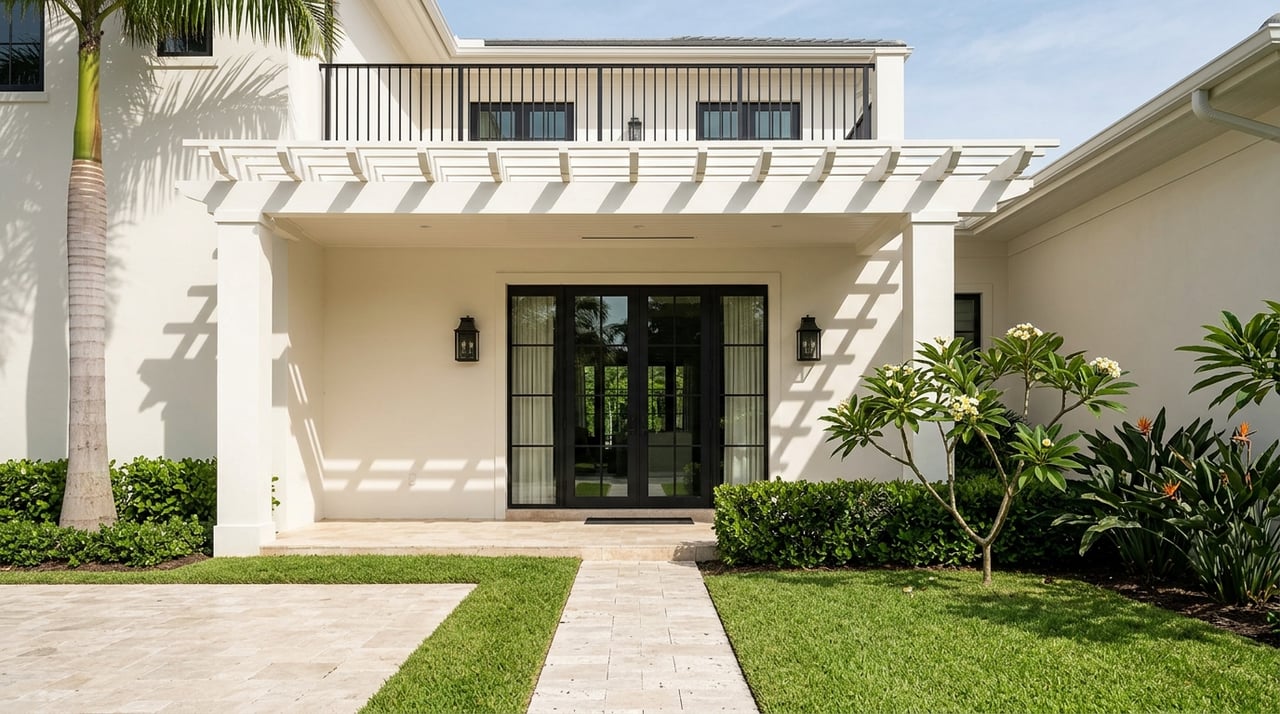
In a residence, that often translates into layered planning rather than visible hardware everywhere. Entry sequences, private family areas, controlled display rooms, restricted storage, and monitored support spaces can all work together to create protection without making the home feel institutional.
This is one reason early planning matters so much. Security, lighting, climate control, and circulation should support one another. When each system is planned in isolation, the home can feel patched together. When they are coordinated from the beginning, the experience is far more seamless.
Build the house and collection together
The best Miami collector homes are not simply large homes with art added later. They are residences where the collection helps shape the architecture from the start. In this market, the city’s art culture gives your home context, while the climate, flood exposure, and hurricane code environment demand technical discipline.
That is why pre-construction is so important for this kind of project. It gives you time to align display priorities, room uses, wall heights, glazing strategy, environmental zones, storage needs, and site resilience before construction is underway.
For estate-scale homes in Miami, that coordination can make the difference between a house that merely accommodates art and one that truly supports it for the long term. If you are planning a custom residence around a meaningful collection, Jomed Construction can help you approach the project with the level of planning, craftsmanship, and construction management it deserves.
FAQs
What makes a Miami home different for art collectors?
- Miami combines a strong arts ecosystem with hot weather, intense sun, flood concerns, and hurricane-zone building requirements, so collector homes need careful planning for light, climate stability, envelope performance, and security.
What temperature and humidity levels matter for an art collection at home?
- Smithsonian guidance notes a commonly used museum target for one class of collection of about 70 degrees Fahrenheit plus or minus 4 degrees and 45 percent relative humidity plus or minus 8 percent, with stability being especially important.
Why should art storage stay out of vulnerable lower areas in Miami-Dade?
- Miami-Dade County identifies flooding as a persistent coastal and inland threat, so placing collection rooms, archival storage, and key mechanical systems with flood exposure in mind is a smart design step.
Can a Miami house still have lots of glass if it includes serious art?
- Yes, but large glazed areas, skylights, and bright rooms should be paired with shading, filtering, and room-by-room environmental and lighting control so the collection is not exposed to unnecessary risk.
What kinds of artwork need the lowest light levels?
- National Park Service guidance says extremely light-sensitive materials such as paper, photographs, textiles, and watercolors should be kept at about 50 lux or less.
Why is pre-construction important for a collector home in South Florida?
- Pre-construction helps you coordinate envelope decisions, flood-aware planning, wall heights, lighting, HVAC zones, storage, and circulation before the house is built, which is far more effective than trying to retrofit those priorities later.