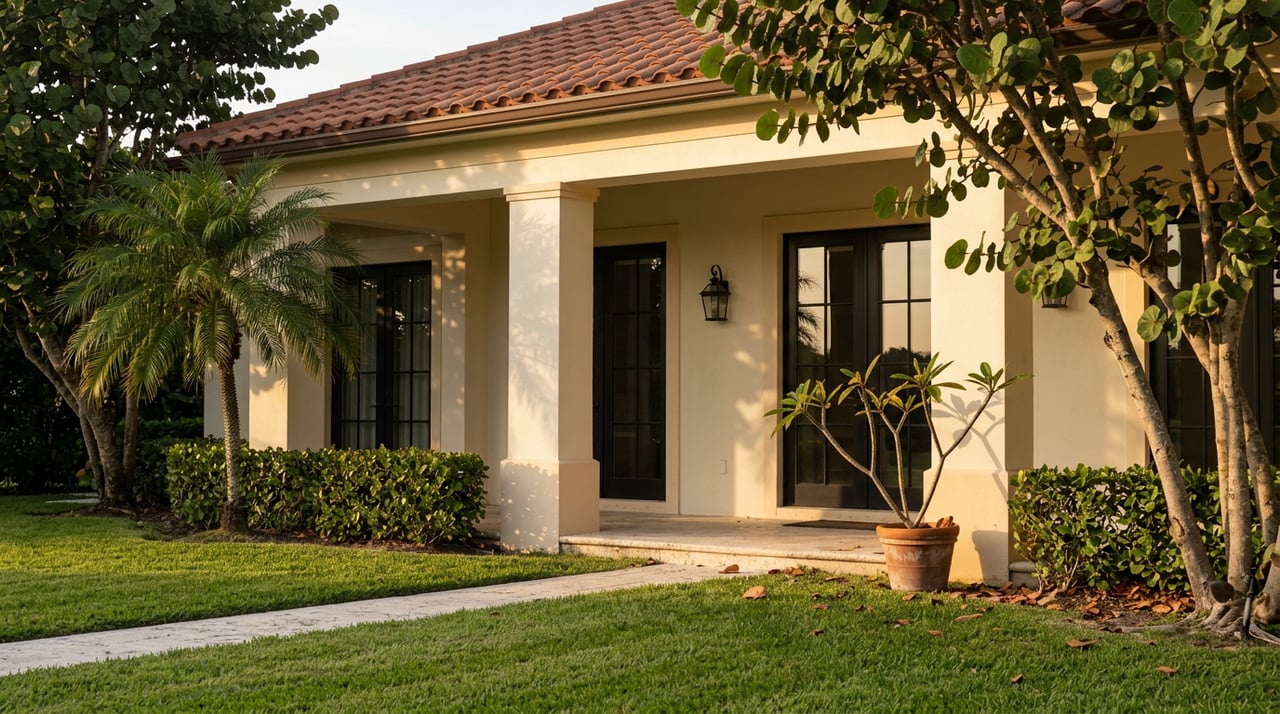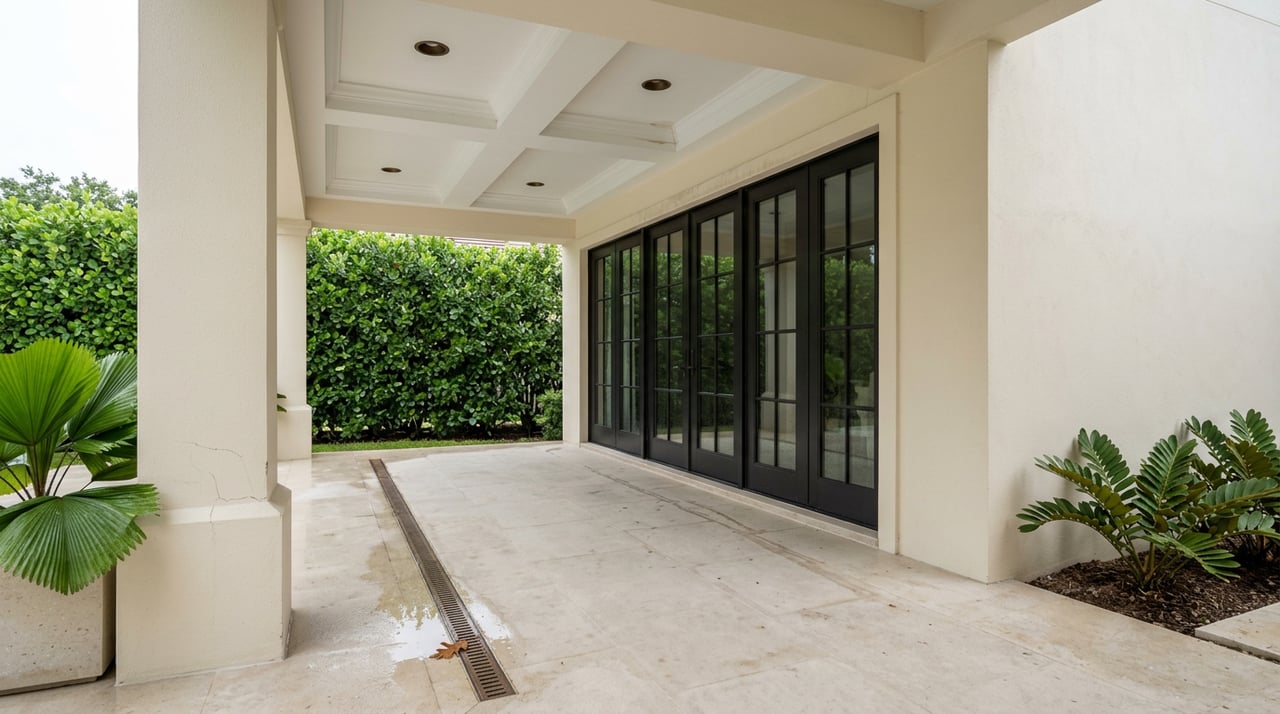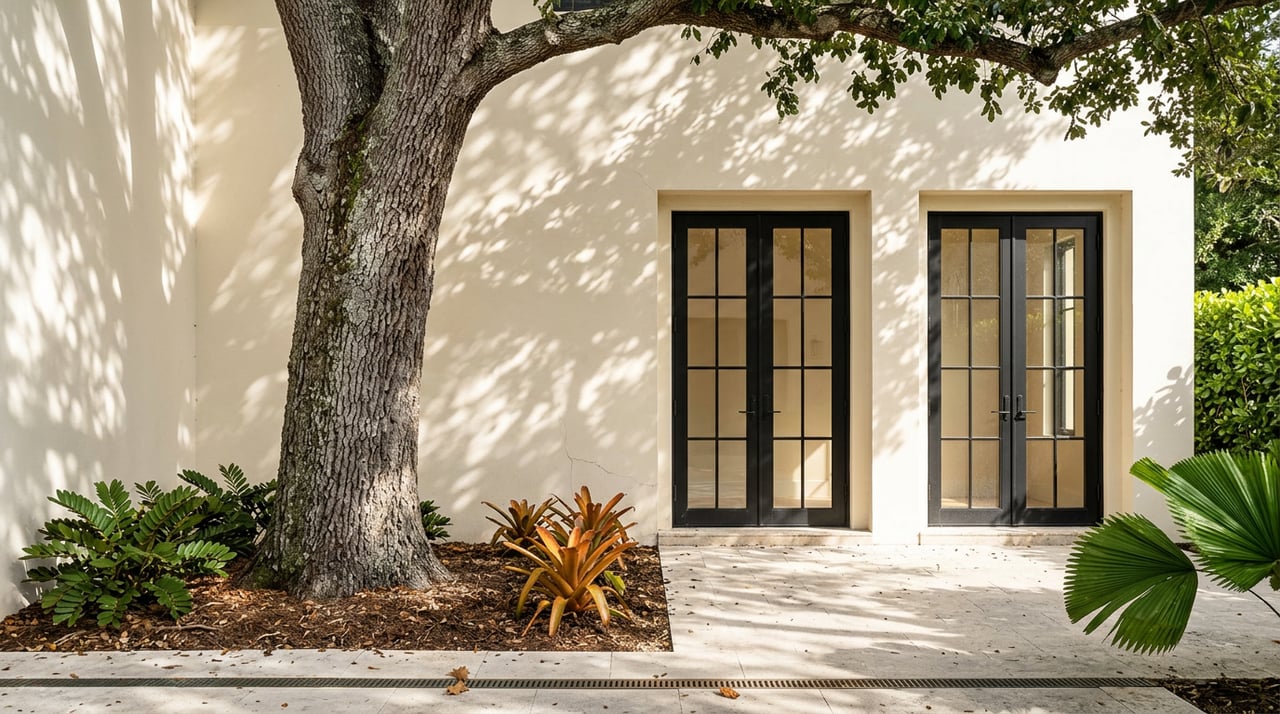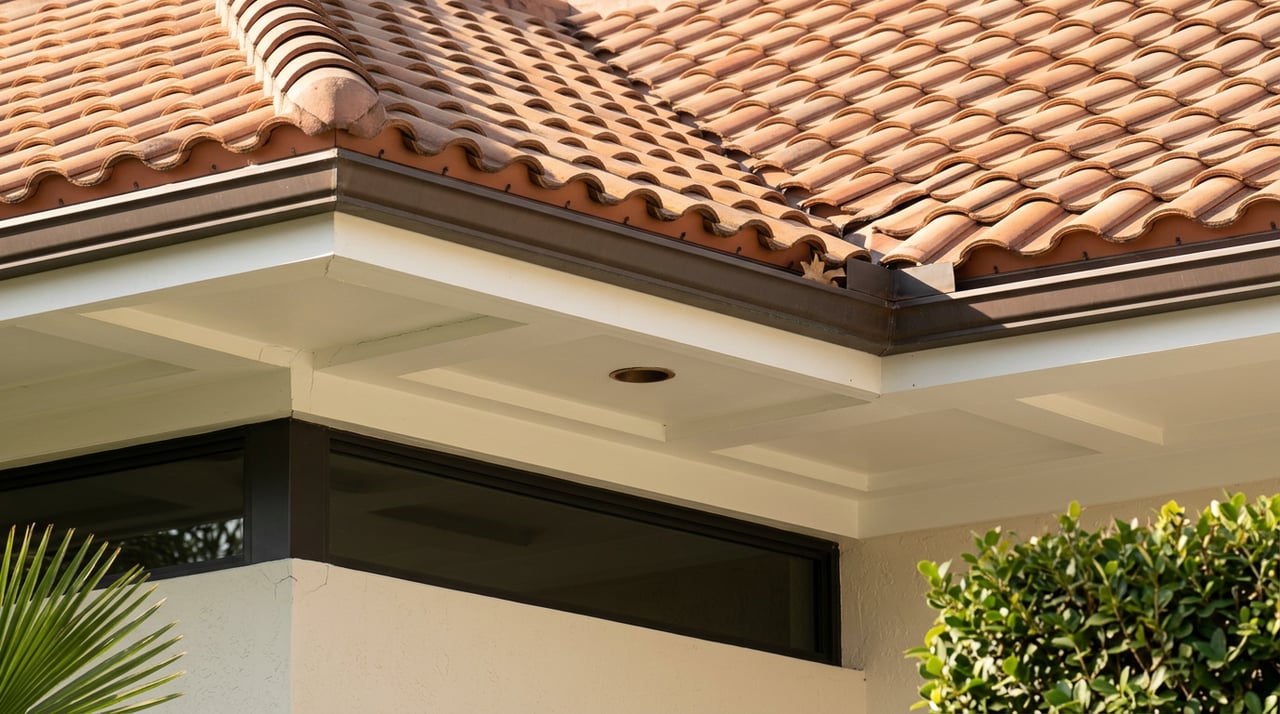
A code-compliant HVHZ roof on a Coral Gables or Miami Beach estate is engineered twice. Once by the architect and structural engineer, who specify a hip geometry, a sealed deck, impact-rated openings on every opening, and a clay tile system that satisfies Miami-Dade Product Control. And once by the contractor's document file, which has to prove, on paper, that every component on the roof matches the assembly the underwriter is being asked to credit.
Until this year, the second version rarely got the attention it deserved. Owners assumed a Notice of Acceptance in the permit packet was enough, and that the wind-mitigation discount would follow automatically at policy renewal. The Florida Office of Insurance Regulation changed the assumption on April 1, 2026.
The credit lives in the paper, not the tile
The windstorm portion of a Florida coastal homeowners premium generally runs somewhere between a third and two-thirds of the total bill, and Florida Statute 627.0629 requires carriers to reduce the windstorm portion of the premium for verified features such as a hip roof, impact-rated windows, a reinforced roof-to-wall connection, and a sealed roof deck. On an estate-scale home in Miami-Dade, that mandate is not a rounding error. It is the single largest lever an owner has on insurance cost after the assembly is built.
The lever only pulls when the features are documented on the state's uniform inspection form. As of this spring, that form is new. The credits are documented on a revised inspection form, the OIR-B1-1802 (Rev. 04/26), and if a prior wind mitigation report predates the change, or a roof, windows, or doors have been replaced recently, this is the year to get current. The document is short. The evidence it now demands is not.
What the April 2026 form actually changed
The revision is the first meaningful overhaul in more than a decade. The updated form, published by the Florida Office of Insurance Regulation, reflects the findings of a 2024 Applied Research Associates study on residential wind-loss mitigation that analyzed real hurricane performance data to provide more accurate discount percentages, and it includes enhanced documentation requirements, particularly for impact windows, roof coverings, and roof-to-wall connections, to ensure that only verified, properly installed features qualify for discounts.
For a Miami luxury build, four practical shifts matter:
- The new form requires inspectors to provide more specific evidence for each feature, including photos, product approval numbers, and permit documentation, so inspections that were straightforward under the old form may now require additional verification.
- The updated form took effect April 1, 2026, and insurers are expected to begin applying credits under the new form starting July 2026.
- The old form (Rev. 01/12) is still accepted if the inspection was conducted within five years before April 1, 2026, with no structural changes.
- Updated discount tables reflect more current building science and real-world hurricane performance data, so some features may qualify for higher discounts under the new form while others are assessed under stricter criteria.
Translated into construction management terms: the inspector who arrives at the finished house is now expected to reconcile what is visible with what is in the file. A hip roof reads at a glance. A sealed deck, an NOA-matched underlayment, a ring-shank fastening schedule, and a roof-to-wall clip pattern do not. They read from photographs taken during dry-in, from product-approval numbers stapled to the permit, and from a closed final inspection.
Where HVHZ makes Miami different from the rest of Florida
Outside Miami-Dade and Broward, a Florida Product Approval (FL#) is generally sufficient. Inside the High Velocity Hurricane Zone, it is not. The cornerstone of HVHZ compliance is the Notice of Acceptance, administered by the Miami-Dade Building Department's Product Control section, and every roofing product, not just the system, must have a current, valid Miami-Dade NOA.
Design wind speeds are also unforgiving. The FBC 8th Edition sets design wind speeds of 175 mph in Miami-Dade and 170 mph in Broward for Risk Category II construction, and the HVHZ requires Miami-Dade County NOA approval for every roof component and mandates a 6-nail HVHZ attachment pattern. On a Mediterranean-Revival estate with a hip-and-valley clay tile roof, the fastening schedule alone dictates crew sequencing, tile lot ordering, and dry-in choreography.
The cost consequences are equally specific. In Miami's HVHZ, clay tile must be mechanically fastened, each tile screwed or nailed rather than merely mortar-set, and the tile underlayment must carry a Miami-Dade Product Approval, with installed cost for quality clay tile in the HVHZ running $22 to $45 per square foot of roof area versus $12 to $25 per square foot for standing-seam metal. An owner writing a check for the higher assembly is also writing a check for the higher credit, provided the file supports it.
The failure modes underwriters now catch
The paper trail breaks in predictable places. A commercial HVHZ contractor summarized the most damaging errors as follows: using standard FL# approved products instead of NOA-approved products, which is the most common error when a product is Florida approved but does not have a current Miami-Dade NOA and the contractor assumed FL# was sufficient; expired NOA, where a product was specified based on a prior project where the NOA was valid and no one checked; NOA installation method mismatch, where the NOA covers adhered application but the contractor installed mechanically fastened, or vice versa; and missing progress inspections, covering insulation before the required substrate inspection.
Any one of these turns up during a wind-mitigation inspection on the new form. A homeowner who paid HVHZ premiums for the assembly then has to defend a file that either cannot be produced or contradicts what was installed.
The permitting piece is equally unforgiving. The inspector confirms whether the roof covering meets current FBC wind standards or the older Miami-Dade HVHZ standard, and to qualify, the shingles must be rated for the wind speeds required by code in the zone, the install needs a valid permit on file, and the inspector typically wants documentation of the product approval, either an NOA or an FL product approval number. On luxury projects where permits are pulled across multiple municipalities in Miami-Dade, each with its own building department, an unclosed permit from a change order two years earlier can be the reason a $2,450-a-year credit never lands.
The pre-construction moves that protect the credit
The mid-project scramble is avoidable. It is a pre-construction planning problem, which is where a construction-manager delivery model earns its keep. On a Jomed-managed roof scope in the HVHZ, the sequence looks roughly like this:
- During design coordination, the roofing spec is written with NOA numbers, not brand names, and each NOA is checked against its expiration date and against the installation method the drawings require.
- The permit application is assembled with NOAs for every product on the assembly, from underlayment through ridge, plus stamped structural drawings that align the fastening schedule with the wind speed for the specific lot.
- Dry-in is photographed at scale. The self-adhered secondary water barrier, deck fastener pattern, roof-to-wall clips, and any HVHZ tile batten detail are documented in a form the wind-mitigation inspector can read against the OIR-B1-1802 categories.
- The dry-in inspection is scheduled and passed before any covering goes down. Miami-Dade requires multiple inspections, including a dry-in inspection after underlayment and a final inspection after roof completion.
- The final inspection is scheduled, passed, and closed. The inspector verifies the finished roof matches the permit, the NOAs, and the HVHZ details, and only after the final passes is the permit closed; always confirm the permit was closed, not just issued.
- The complete paper set, NOAs, permit history, photographs, and closed inspections, is delivered to the owner in a form the insurance carrier can accept without a second visit.
None of this is optional under the new form. It is simply visible now in a way it was not in 2025.
The design decisions that stack credits
The form rewards specific choices. On an estate build, four of them do most of the work.
Hip geometry is the largest single roof-shape credit. The most common roof shapes are gable and hip, but newer construction builds in Florida tend to be hip or hip combination roofs because they perform better against high wind speeds, and hip roof types are incredibly stable against extreme winds because they have no flat face for the wind to catch, reducing uplift pressure. Mediterranean and Hamptons-inflected massing lends itself to this geometry naturally. Modern flat-roof designs do not, which is a real trade-off for owners comparing styles.
Opening protection is the largest single credit on the form and it is all-or-nothing. Impact-rated windows and doors, code-approved shutters, and reinforced garage doors qualify; the category is all-or-nothing, so if even one opening lacks qualifying protection, the home receives no credit here, and interior blinds, shades, decorative shutters, and window film do not qualify. On an estate with pool bath doors, service entries, and pergola-adjacent French doors, this is where projects lose money quietly. Every opening must be specified and documented, not just the primary elevations.
Secondary water resistance is a straightforward yes or no on the form and it is a genuine hurricane performance feature. Secondary water barriers greatly improve the underlayment's ability to serve as an SWB, which is required in the code, and SWBs have proven very effective at preventing both extensive interior damage and the displacement of the building's occupants in the event of a roof covering failure.
Roof-to-wall connection is where older Miami inventory generally lags new construction. On a new build, the clip or strap detail is engineered from the start and photographed during framing inspection, which means the credit is captured without additional cost.
FAQ
If the wind mitigation form was already on file before April 2026, does it need to be redone? Not immediately. The prior report remains usable for a defined window, and if the inspection was completed before April 1, 2026, it remains valid for the next five years, or until structural changes are made. On a new construction handoff, the first inspection will use the current form regardless.
Does the FBC 8th Edition still govern, or is a 2026 code cycle imminent? The 8th Edition remains in force. The FBC 8th Edition (2023) is currently in effect statewide, and the 2026 update is in technical advisory committee review with no scheduled adoption date as of mid-2026.
Are the HVHZ premiums worth it on a luxury build? The cost premium is real and so is the insurance offset. The hurricane code adds about 5 to 10 percent to total construction cost for a typical inland Florida home, and 10 to 15 percent for HVHZ builds in Miami-Dade and Broward, but a new Florida home built to current code with all wind mitigation features earns the strongest possible insurance discounts. The discipline the new form imposes is what lets an owner actually collect on the discipline the construction imposed.
A Miami luxury roof in 2026 is a design object, an engineered assembly, and a document file. All three have to agree. When they do, the owner captures the credit the assembly was engineered to earn. When they do not, the roof still performs and the premium still climbs.
Jomed Construction manages HVHZ roof scopes on estate-scale Miami residences from pre-construction through closed permit and delivered paper trail. To discuss a project on the boards or a roof scope on an existing build, Request a Project Consultation.