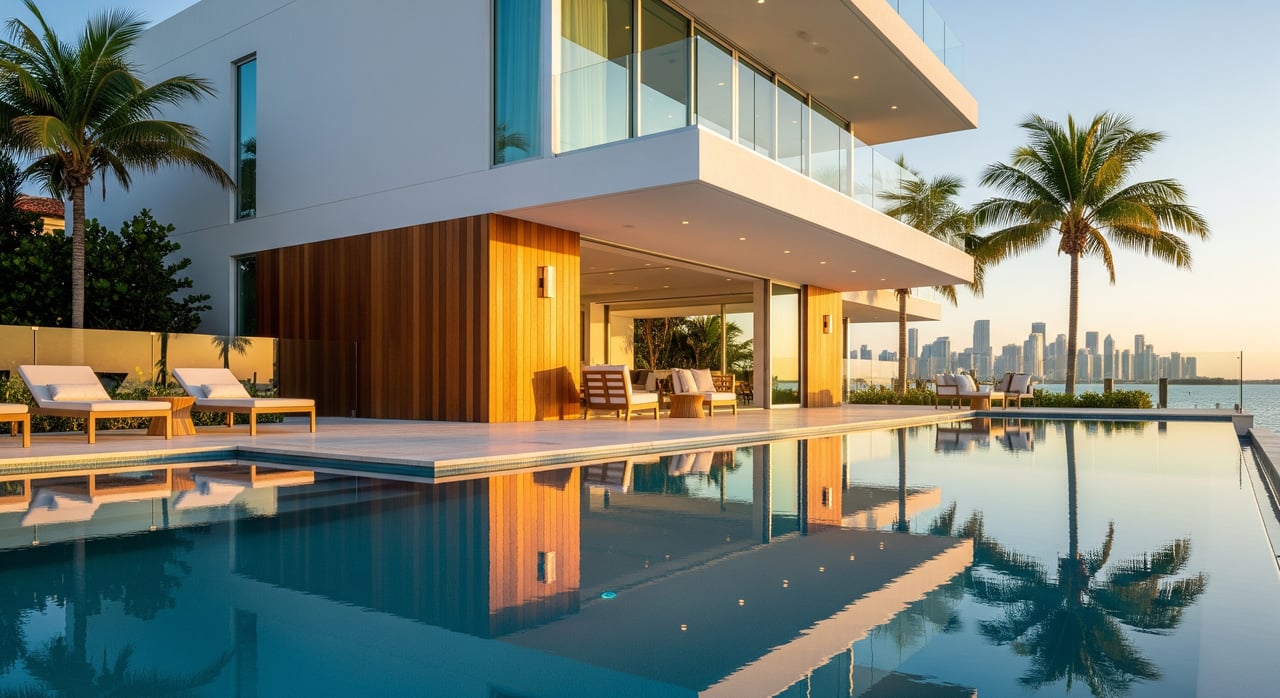
Are you torn between commissioning a custom estate or buying a finished luxury home in Miami? You are not alone. Many high‑net‑worth buyers face this same choice as they plan a move or upgrade in Miami‑Dade. In this guide, you will see how timeline, customization, carrying costs, regulatory risk, resale, and the general contractor relationship differ, so you can decide with confidence. Let’s dive in.
Miami luxury context
Miami’s luxury market attracts domestic and international buyers who value climate, lifestyle, and favorable taxes. Demand tends to concentrate around waterfront access and high‑design properties. Inventory at the top end can be volatile because transactions are fewer, which makes pricing sensitive. If you want the best fit and fewer compromises, understanding your priorities up front will guide whether you build or buy.
Build vs buy tradeoffs
Buying an existing luxury home offers immediate occupancy and a known product. You can see layout and finishes and typically secure traditional, long‑term financing on a faster timeline. You also benefit from neighborhood comparables that help anchor value.
Building a custom home gives you complete control over layout, finishes, systems, and resilience. You can optimize orientation and elevation for flood performance, integrate impact‑rated exterior systems, and design for your lifestyle. The tradeoff is a longer, more variable timeline and higher carrying costs during design, permitting, and construction.
As a rule of thumb, choose building if you prize uniqueness, privacy, or site‑specific features like a large boat lift, multi‑bay garage, or bespoke materials. Choose buying if time to occupancy, near‑term cost control, and clear neighborhood comps are the priority.
Timeline reality in Miami
A realistic total timeline for a custom luxury home in Miami often ranges from 12 to 36 months from site purchase to move‑in. The sequence typically includes:
- Site selection and due diligence
- Concept and schematic design
- Permitting and approvals
- Construction and commissioning
- Final inspections and certificate of occupancy
Design often takes 3 to 9 months, depending on complexity. Permitting varies by municipality and scope. Standard residential approvals can be quick, but coastal, waterfront, or special overlays can add months. Construction for a mid‑ to large luxury home commonly runs 12 to 24 months, and ultra‑custom waterfront estates can extend beyond that.
Why timelines stretch here: coastal requirements, elevation and flood mitigation, potential seawall work, protected vegetation, and high wind product approvals. Specialty trades like marine contractors and impact glazing fabricators can also affect scheduling.
Cost, financing, and carrying costs
When building, account for four buckets:
- Hard costs: site work, foundations or pilings, structure, enclosure, MEP systems, pool, landscape, and any marine work like seawalls.
- Soft costs: architecture, engineering, permits, impact fees, surveys, and testing.
- Carrying costs: construction loan interest, insurance, property taxes, utilities, site security, and temporary housing.
- Contingency and escalation: many owners budget 10 to 20 percent or more for luxury builds to manage unforeseen conditions and market shifts.
Financing differs too. For purchases, long‑term mortgages often provide lower rates and faster closing. For builds, construction loans fund in draws and usually carry higher rates during construction, then convert to permanent loans at completion. Lenders will evaluate projected value and require detailed cost schedules and inspections for each draw.
Insurance and taxes are material in Miami‑Dade. Builders risk, general liability, and wind and flood coverages are needed for construction and can be costly on the coast. Florida has no state income tax, but property tax and insurance are meaningful ongoing expenses.
Permitting and site risk in Miami
Miami‑Dade’s coastal environment creates unique regulatory and site considerations:
- FEMA flood zones and elevation requirements affect design, foundation type, and mandatory flood insurance.
- Miami‑Dade enforces high wind‑load standards and rigorous product approvals for exterior systems.
- Zoning varies by city, with specific setbacks, lot coverage, height, and in some cases, design review boards.
- Waterfront work like seawalls and docks can require additional permits and longer review timelines.
- Tree preservation, mangrove protections, and shoreline rules can shape the site plan and schedule.
A careful pre‑purchase due diligence phase is essential to avoid surprises that add time and cost.
Resale and appraisal reality
Luxury resale depends on neighborhood parity and available comparables. A custom home priced far above nearby sales can face appraisal and resale challenges. Highly personalized layouts may shrink your buyer pool. By contrast, high‑quality construction, flood resilience, impact‑rated systems, indoor‑outdoor living, and water access tend to support marketability. New construction can command a premium when it pairs contemporary systems with resilient design, but it will still be benchmarked against local comps.
Why your GC choice is decisive
A disciplined, Miami‑experienced general contractor reduces your risk and protects design intent throughout the process. Key protections include:
- Permitting navigation: coordinating municipal, coastal, and environmental reviews so submittals are complete and responsive.
- Procurement discipline: locking critical materials and specialty trades, managing lead times, and controlling price exposure.
- Schedule and cash flow: realistic milestone scheduling and documentation for lender draws.
- Quality control: submittal reviews, shop drawings, and mockups that align the build with the architect’s specifications.
- Contract and lien management: clear pricing structures, change‑order discipline, lien waivers, and warranty obligations.
- Insurance and safety: proper coverage and inspection readiness to prevent delays or stop‑work orders.
For estate‑scale, coastal, and design‑forward homes, this coordination can be the difference between a smooth build and a costly reset.
Due diligence checklist
Use this shortlist before you commit to a lot or a build path:
- Site diligence: boundary and topo surveys, soils report, seawall condition and ownership, flood zone and required elevation, utility capacity, zoning and setbacks, HOA design rules, and environmental constraints.
- GC and architect vetting: recent local project references, coastal and seawall experience, approach to change orders, average schedules, subcontractor vetting, insurance and claims history, and warranty structure.
- Financial modeling: 10 to 20 percent contingency for luxury builds, interest reserve, insurance and taxes, utilities, and market escalation. Include opportunity cost during the build timeline.
- Insurance and lender: secure preliminary builders risk and property insurance quotes early. Work with lenders experienced in construction loans and conversion to permanent financing.
Decision framework
Answer these questions to clarify your path:
- Is time to occupancy more important than complete customization? If yes, buying likely dominates.
- Do you want unique site features, exacting finishes, or a one‑of‑a‑kind plan? If yes, building is the better fit.
- Are you comfortable with variable carrying costs over 12 to 36 months? If not, favor existing inventory.
- Will your target neighborhood support your finished value on resale? If not, re‑scope or consider a different site.
If you choose to build, make the GC your first strategic hire alongside your architect to establish scope, budget, and schedule discipline from day one.
How Jomed can help
For HNW owners considering a custom home in Miami, a seasoned GC adds measurable certainty. Jomed Construction brings a family legacy dating to the 1970s, deep local permitting relationships, and a construction‑manager delivery model that prioritizes schedule control, transparent monthly reporting, and high‑craft execution. Our team is experienced with waterfront foundations, complex sites, and architect‑led, design‑sensitive projects across Greater Miami.
If you are weighing build versus buy and want practical guidance, we can help scope scenarios, outline timelines, and structure a plan that protects your design intent and investment.
Ready to explore your next move in Miami‑Dade luxury real estate? Connect with Jomed Construction to Request a Project Consultation.
FAQs
How long does a custom luxury home take in Miami?
- The total process often ranges from 12 to 36 months from site acquisition to move‑in, depending on design complexity, permitting, and construction scope.
Will building cost more than buying an existing luxury home?
- Building typically carries higher short‑term costs due to design, soft costs, hard costs, and holding expenses, though a well‑executed custom home can deliver superior long‑term utility.
What Miami‑specific risks should I plan for?
- Expect flood and coastal permitting requirements, potential seawall repairs, hurricane‑resilience standards, rising insurance costs, and variable municipal review timelines.
How does the general contractor protect design intent?
- A disciplined GC coordinates shop drawings, submittals, and mockups, sequences specialty trades, and manages quality so the home is built to the architect’s specifications.
What should I review before closing on a waterfront lot?
- Verify surveys, soils, flood zone and elevation, seawall condition and permits, zoning and setbacks, utility capacity, environmental constraints, and any HOA design rules.