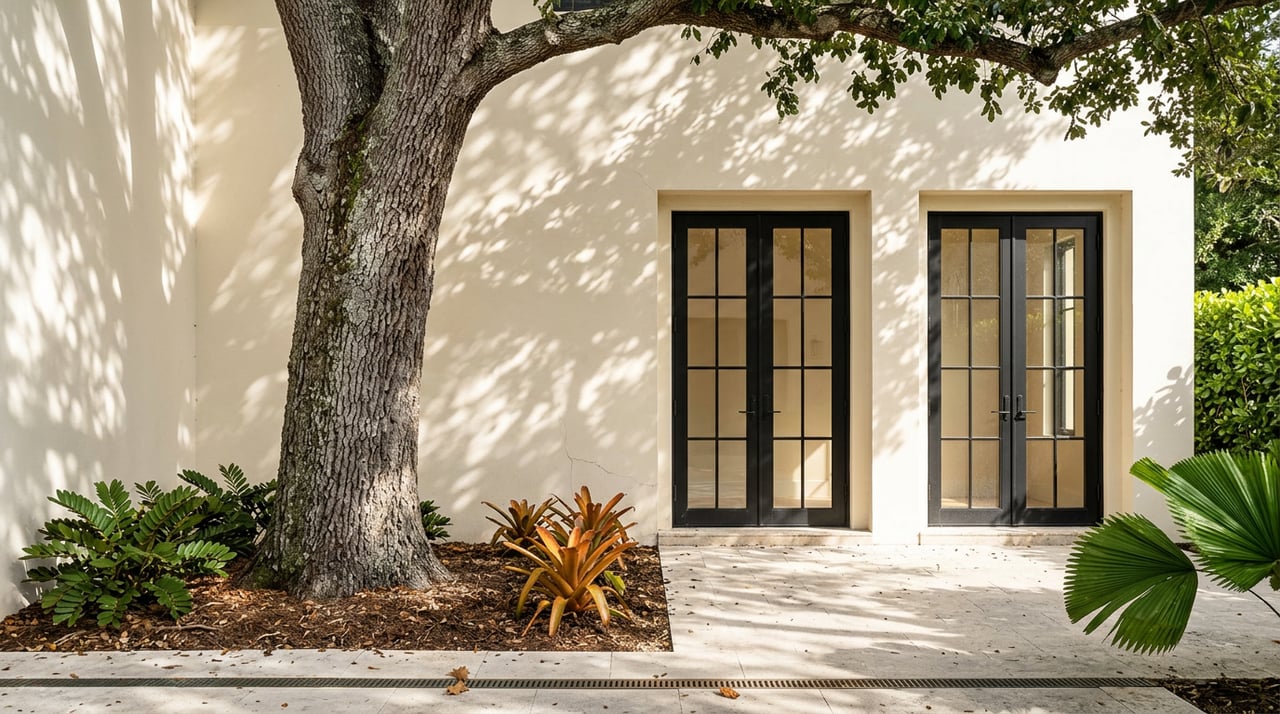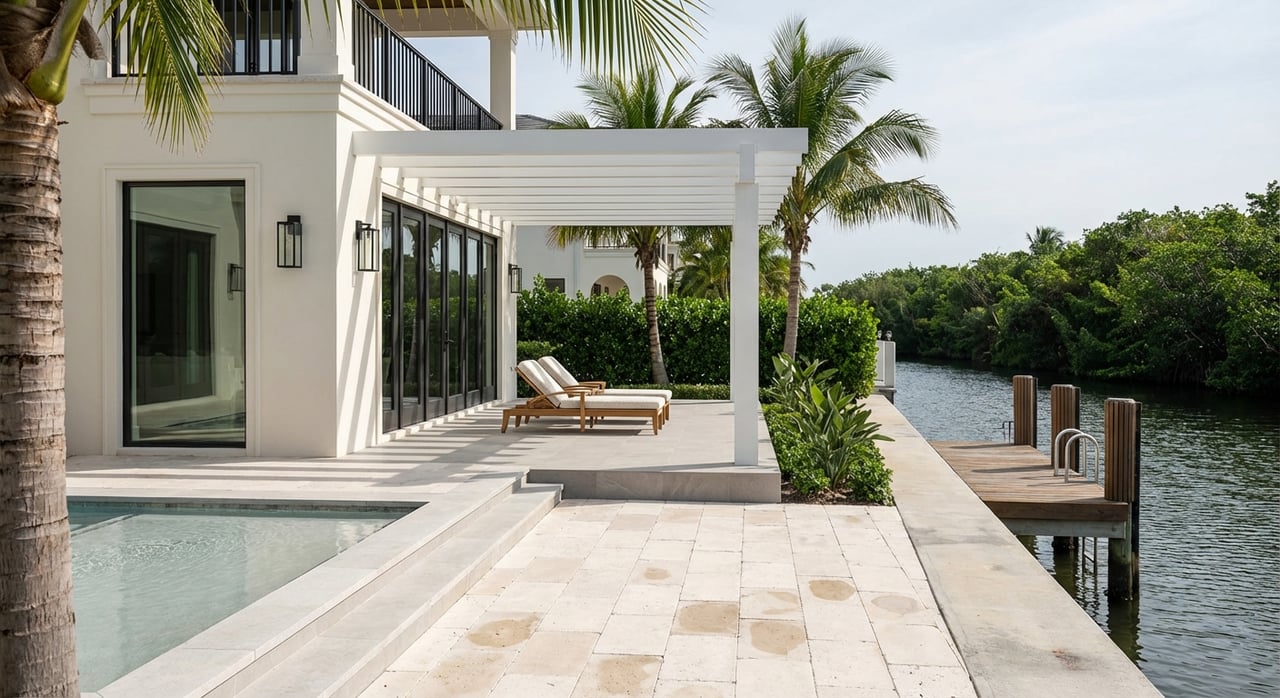
If you love the idea of a glassy, light‑filled home on the bay or a quiet canal, Miami’s climate asks you to think a little differently about design. Heat, humidity, wind and salt all shape how your estate will perform in 5, 15 and 50 years. The good news: with the right planning, you can have stunning views, seamless indoor–outdoor living, and a structure built for long‑term durability.
This guide shows you how climate and codes translate into smart choices for site layout, structure, glazing, docks and materials on Miami’s waterfront. You will see what to ask your team, where the permitting touchpoints are, and how to future‑proof key systems. Let’s dive in.
Miami climate realities that shape design
Heat, humidity and heavy rain
Miami is hot and humid for much of the year, with a defined wet season. That means more solar heat gain through glass, higher cooling loads and a greater risk of interior moisture issues without careful detailing. You will want shading, high‑performance glazing, and HVAC designed to manage humidity, not just temperature. For climate context, review Florida’s state climate summary that outlines the region’s heat and rainfall patterns and their design implications for buildings from this state summary resource.
Sea‑level rise and tide cycles
Regionally adopted projections used by local governments point to meaningful near‑ and mid‑term sea‑level rise. The Southeast Florida Climate Compact recommends planning around roughly 10 to 17 inches by 2040 and 21 to 54 inches by 2070 above 2000 mean sea level. Use these ranges as baselines when you evaluate site elevation, seawalls and long‑life outdoor features per the Compact’s projection guidance. High‑tide or “king tide” flooding already occurs in parts of the county, so driveway and entry elevations, drainage and service equipment placement deserve early attention.
Hurricanes, wind and storm surge
Miami‑Dade lies in Florida’s High‑Velocity Hurricane Zone, which drives higher wind design pressures and stricter testing for windows, doors and railings. In practice, that means specifying impact‑rated openings with verified approvals, fastening systems designed for uplift, and careful detailing at roof edges and large openings. Your dock, boat lift and shoreline also need to account for surge and wave action.
Salt spray and accelerated corrosion
Salt in humid air accelerates corrosion of metals and degradation of some coatings. It is a core reason you see marine‑grade stainless, anodized or PVDF‑coated aluminum, and composite decking on premium coastal projects. Materials and fasteners that look similar on day one can perform very differently after a few seasons by the water.
Codes and permits to plan around
HVHZ product approvals for windows, doors and rails
Miami‑Dade requires products that meet the High‑Velocity Hurricane Zone provisions of the Florida Building Code. In practical terms, you or your architect should confirm every exterior opening product has either a Florida Product Approval marked for HVHZ or a Miami‑Dade Notice of Acceptance. Gather these approval numbers early, since they are required for permitting and inspections. You can search product approvals on the state portal and verify documentation with Miami‑Dade Product Control through the Florida Building Code product approvals portal and Miami‑Dade’s Product Control search.
Flood zones, BFEs and elevation strategy
Start by confirming your parcel’s flood zone and Base Flood Elevation, then plan finished floor elevations and any lower enclosures accordingly. Miami‑Dade’s interactive flood map tool helps you identify Special Flood Hazard Areas and insurance requirements using the county’s flood map resource. For homes exposed to waves or surge, FEMA’s coastal construction guidance favors elevated, pile‑supported structures and breakaway walls below the living level to reduce damage potential as summarized in FEMA’s coastal building science guidance.
Shoreline work, docks and multi‑agency reviews
Seawalls, docks and mangrove or seagrass impacts often trigger county, state and sometimes federal reviews. In addition to Miami‑Dade environmental permits, properties near sandy beaches may fall under Florida’s Coastal Construction Control Line program, which adds protective standards and review steps outlined by Florida DEP’s CCCL program. Early ecological surveys, permit feasibility checks and coordination with a marine engineer help you avoid design rework and delays.
Structural strategies for the water’s edge
Elevate with piles and plan for water
For bayfront or canal homes, an elevated, pile‑supported structure is a proven approach. Deep foundations resist scour and hydrodynamic loads, while breakaway or non‑structural lower walls reduce damage risk if water rises into ground‑level areas. Your structural engineer will tie foundation design to site soils, expected wave action and applicable flood and wind loads. The payoff is a stiffer, safer structure and lower potential for flood damage.
Protect building systems
Keep electrical gear, mechanical units and critical infrastructure above design flood elevations. Where possible, make primary systems serviceable and relocatable so you can adapt as conditions change over decades. Elevate boat‑lift motors and dock power, and specify corrosion‑resistant enclosures and hardware.
Envelope, glazing and shade that work
Impact openings and verified documentation
Use impact‑rated windows and doors sized and anchored for HVHZ pressures. Require submittals that show the Miami‑Dade NOA or Florida Product Approval HVHZ status, and keep copies on site for inspection. For large openings, coordinate structural support and deflection limits so high‑performance glazing and frames do their job.
High‑performance shading and roofs
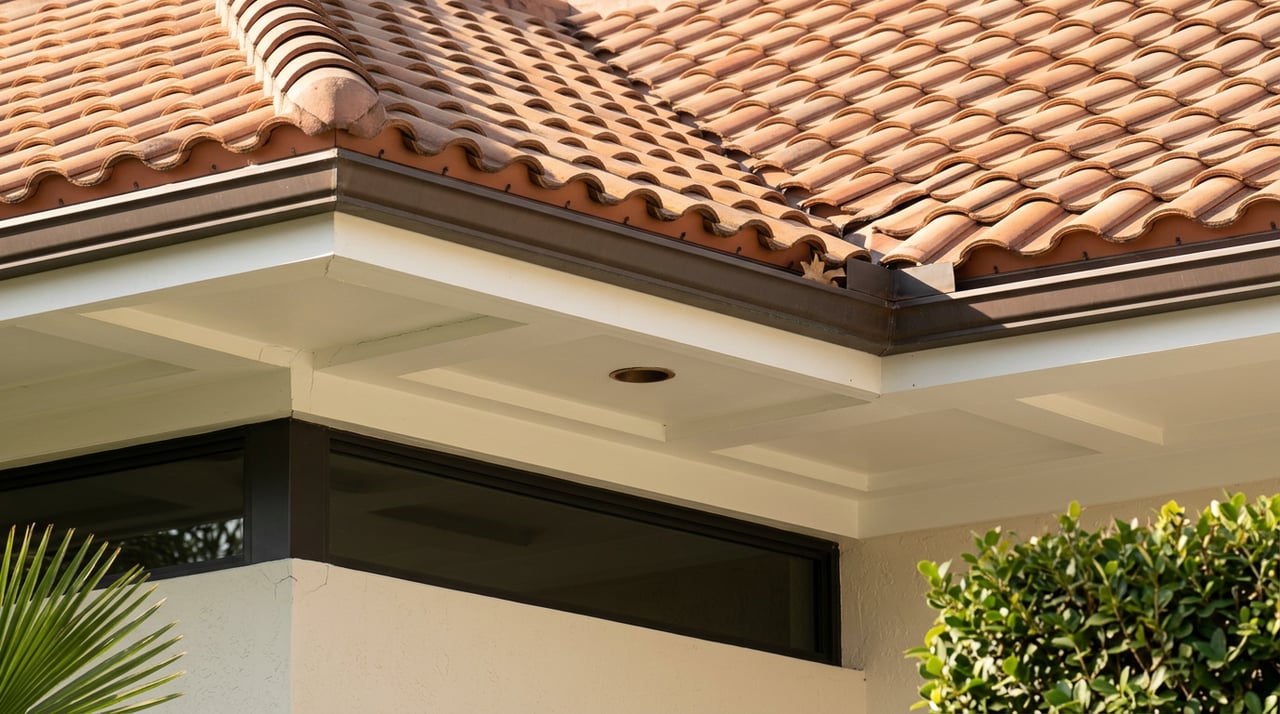
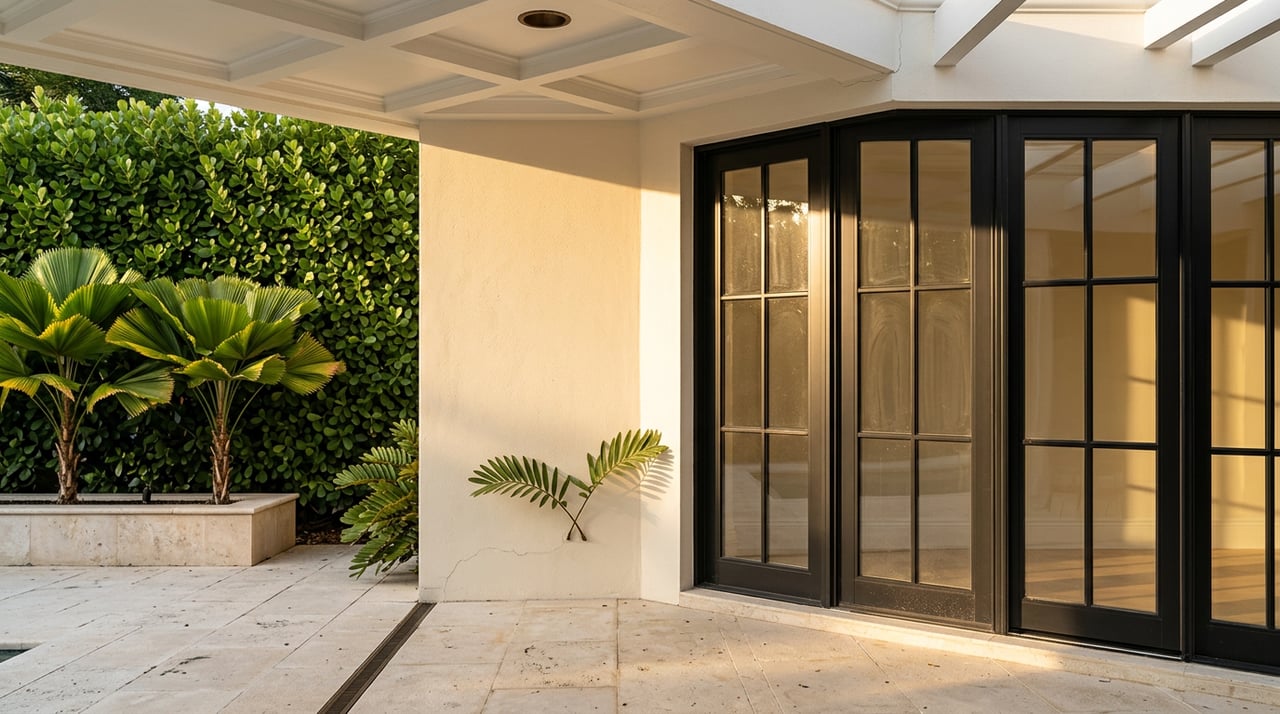
Deep overhangs, covered loggias and exterior shading devices cut solar gain and protect finishes. Cool roof materials help with heat, and if you plan rooftop solar, specify mounting systems with tested approvals and uplift calculations. Shade is comfort in Miami; it also extends the life of doors, decking and outdoor furniture.
Materials that last in salt air
Marine‑grade metals and smart coatings
Exterior fasteners, brackets and hardware should generally be 316 or 316L stainless in direct salt exposure. Avoid plain carbon steel and light galvanizing where you cannot easily inspect and maintain it. For aluminum cladding and metalwork, factory‑applied PVDF finishes with AAMA 2605‑type performance are known for color stability and chalk resistance in high‑UV coastal settings as explained in this overview of Kynar 500 PVDF finishes.
Decking, docks and connections
Composite decking and tropical hardwoods are common choices for durability. Hidden‑fastener systems reduce exposed corrosion points. Engage a marine engineer on pile selection, wraps and cathodic protection strategies so submerged elements live longer.
Comfort, moisture and indoor performance
Design HVAC for dehumidification first
In a hot‑humid climate, oversized systems that drop air temperature fast without removing moisture can leave interiors clammy and vulnerable to mold. Ask your mechanical engineer to size for sensible and latent loads, consider dedicated dehumidification, and plan reliable condensate management. The EPA’s moisture control guidance underscores why dehumidification and balanced ventilation matter in homes like these in this moisture and mold resource.
Interior finishes and coastal equipment choices
Favor mold‑resistant backers in wet zones, closed‑cell insulation where appropriate, and HVAC equipment with coastal corrosion protection. Inside millwork and specialty finishes also benefit from humidity‑aware detailing, from acclimatization during install to clear expansion allowances.
Docks, boats and outdoor rooms
Plan dock design around permits and vessels
Dock length, configuration and lift capacity depend on channel width, seagrass locations, and permitted access. Before you fall in love with a layout, verify water depth for your intended boat, shore power locations relative to flood elevations, lighting, and safe egress during storms. A short feasibility phase with a marine engineer and permitting consultant pays dividends.
Living shorelines and wildlife lighting
Where suitable, living shorelines that use native plants and habitat‑friendly features can reduce long‑term maintenance and improve ecological value. If you are near nesting beaches, follow turtle‑friendly lighting practices and choose shielded, low‑profile fixtures. Coordinate shoreline and lighting early, since certain locations trigger additional state review under the CCCL framework refer to Florida DEP’s CCCL guidance.
Lifecycle, maintenance and insurance
Build a maintenance cadence into ownership
Salt and sun demand routine care. Plan periodic rinsing of exterior metals, sealant inspections and reapplication, hardware checks, and scheduled replacement of small components. Durable specs reduce frequency, but a documented maintenance plan and warranty file help protect value and resale.
Insurance, mitigation and future‑proofing
Flood and wind insurance costs reflect your zone, elevation, age of construction and mitigation measures. Elevating above BFE, using certified HVHZ products, and adding required flood openings where applicable can influence underwriting. Check local resources on flood protection and talk to your insurer early to understand premium impacts and mitigation credits using this Miami‑Dade flood protection resource. For long‑term adaptability, design electrical and HVAC mains for elevation or relocation, and plan how you might raise seawalls or integrate living‑shoreline elements as projections evolve aligned with the Compact’s planning approach.
A smart process for a serene result
- Assemble the right team early: a coastal‑experienced structural engineer, marine engineer, ecological consultant and a GC with HVHZ permitting expertise.
- Confirm constraints up front: flood zone and BFE, product approvals strategy, shoreline resources, and dock feasibility for your intended vessel.
- Align design with climate: elevate living spaces, specify impact‑rated openings, design shade into the architecture, and choose coastal‑grade materials.
- Protect comfort and value: prioritize dehumidification, detail interiors for Miami’s humidity, and document a maintenance plan.
When you are ready to translate a vision into an enduring estate, partner with a builder who treats planning and craftsmanship with equal weight. To discuss your site, goals and timeline, connect with Jomed Construction and Request a Project Consultation.
FAQs
What sea‑level rise numbers should I plan around for a Miami waterfront home?
- Regional guidance recommends planning for roughly 10 to 17 inches by 2040 and 21 to 54 inches by 2070 above 2000 mean sea level, per the Southeast Florida Climate Compact.
How do flood zones and BFEs affect my design and insurance in Miami‑Dade?
- Your flood zone and Base Flood Elevation drive finished floor heights, lower‑level enclosure rules and insurance requirements; start with the county’s flood map tool and align your elevation strategy with FEMA coastal guidance.
What does HVHZ mean for my windows and doors in Miami‑Dade?
- Products must have HVHZ‑qualified approvals, shown via Florida Product Approval or Miami‑Dade NOA; keep those documents on plans and on site for permit and inspection.
What permits are involved for docks or seawalls on my property?
- Expect Miami‑Dade environmental review plus potential state and federal steps; properties near sandy beaches may fall under Florida’s CCCL program, which adds location‑specific standards and approvals.
Which exterior materials hold up best to Miami’s salt air?
- Specify 316/316L stainless for exposed fasteners and fittings, and use factory‑applied PVDF finishes for aluminum or metal panels to resist corrosion, chalking and color fade.
How can HVAC design reduce moisture and mold risk in a coastal Miami estate?
- Right‑size for latent loads, include dedicated dehumidification where needed, ensure balanced ventilation and plan robust condensate management to keep interiors dry and comfortable.